Showing posts with label Urban Fantasy. Show all posts

Monday, 29 October 2012

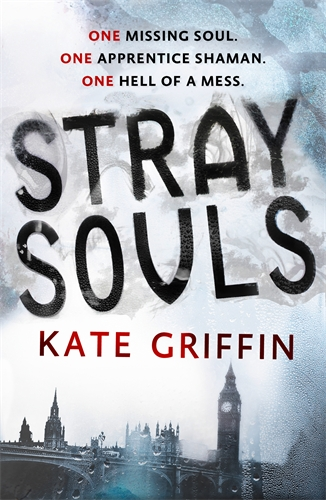
BOOK REVIEW: STRAY SOULS by KATE GRIFFIN


As the saying goes, you can have it fast or you can have it good. With Kate Griffin you get it fast and you get it good as she effortlessly knocks out a couple of novels a year.

In this book, set in the same London as the Night Mayor (who makes several appearances), Griffin has stuck has struck gold with a great idea. Sharon Li who, for some reason, is afflicted with magical problems, sets up a support group called Magicals Anonymous for people (and, as she discovers, people who aren't people) with problems caused by magic. To her surprise, it's quite successful. Also to her surprise she learns that she's a shaman and the only one (with a little help from her new friends) who can deal with a magical danger that even the Night Mayor can't handle.

And that's pretty much all I'm going to tell you about the plot as I wouldn't want to spoil any of the many pleasures and surprises this book contains. I will tell you that this book contains Griffin's considerable and idiosyncratic gift for description, particularly of London. Being cynical I considered that a. she made it all up, or b. spent hours on Google at street level, or c. walked the streets of London more than anyone who wasn't homeless. After checking her blog it turns out that it's c. 

But back to the point, I just want to make it clear that Griffin is a spectacularly good writer. Not a great one yet but give her five minutes and she will be. She sold her first novel at age 14, under her real name of Catherine Webb she was nominated for the Carnegie Medal in two successive years aged 19 and 20. Now she's reached the ripe old age of 26, I shudder to think how good she'll be in about another ten years. Ten years after that she'll probably be World President, if she can be bothered.

I would just like to point out that the page length of this book is deceptive and that you'll read it fair more quickly than you expected (even allowing for the fact that you'll find it difficult to put down). There are a total of 111 chapters in 438 pages giving an average chapter length of fractionally under 4 pages so there is lots of white space. One chapter just consists of 7 words (8 including the title) and all the same word (excluding the title) which I would quote except for that it might be considered unfair usage to print an entire chapter even for review purposes.

The book would also make the basis for a good TV series. A two-parter, based on the book, to introduce the characters coming together, then several more focusing on one or two of the group. That's on British TV. If the Americans buy it it'll probably be called Magicals Anonymous: Missions Very Impossible.

Anyway, get in on the ground floor so you can boast you were reading Kate Griffin before she took over the world. Plus you'll also get to read a terrific slice of British Urban Fantasy.


Thursday, 23 August 2012

URBAN FANTASY AND THE DECLINE OF THE HORROR GENRE

1. Characteristics and recent examples of Urban Fantasy.

"There's a lot of it about" was the accurate title I gave to a review of  The Dirty Streets of Heaven, the first in a new series by Tad Williams. The 'it' being Urban Fantasy. It's easy to characterise or define this newly emerged genre as it has very clear characteristics.

It's set, primarily, in an urban environment (though it can include the suburbs or even visits to the country.

It contains at least one magical or supernatural element, but usually several such as vampires and their ilk, humans with magical powers -witches/magicians etc, demons and angels, ghosts, non-human humanoids such as elves, faeries,trolls, etc .

It may be set in a parallel world where these fantasy elements have been revealed to the general public to exist (the Sookie Stackhouse series to name just one of many, aka True Blood on TV) or are hidden under the surface of our world.

While generally contemporary, it may be set in the past.

Despite what may appear fairly narrow proscriptions, UF is actually a fairly adaptable sub-genre of Fantasy which, I'd argue, includes another popular sub-genre which narrowly preceded it -Paranormal Romance. It lends itself well to police procedural such as Justin Gustainis's Occult Crimes Unit series or, on TV, Grimm. But the potential scope is enormous. The form is also very popular among teenagers to just from the number of UF teen series published.


The reason I mention this is because just recently (i.e. in the last few months specifically, but intermittently for a number of years preceding that)  I appear to read and enjoyed a lot of UF. Kate Griffin's series (four so far) about Matthew Swift, a young sorcerer brought back from the dead with something extra, is a love-letter to London with evocative highly detailed descriptions and prose and an imaginative take on magic in the modern world. (Aside: Ms Griffin is actually also known as Catherine Webb who has written several well received teenage novels starting when she was only 14. She has now reached the venerable age of 26 and writes with the confidence and ability of someone twice her age.) Ben Aaronvitch similarly writes about London but from the viewpoint of a young mixed race copper with slight magical abilities working for a mysterious boss who is a senior police officer. The excellent Rivers of London is the first (of three) in the series and there's a new one coming along any minute now. In Benedict Jacka's Fated, our hero is a Camden-based magician with a gift for seeing the future -all possible futures. He avoids other magic users because they're all treacherous bastards. The third in the series is out soon. 

And these are only the series I've read in the last few months and which, obviously, I recommend as thoroughly entertaining.

2. The decline of horror.

I really should qualify that because, as it stands, it isn't completely true. Horror as a genre still thrives in the short story form and as movies in the cinema, or, more likely thanks to the endless appetite for low budget zombie movies, in direct to video form. The Sy-Fy channel also churns dozens of forgettable monster movies usually about mutant/prehistoric sharks, snakes, spiders, and crocodiles.

Horror is decline in terms of novels because the tropes of horror have been appropriated and adapted by what has become Urban Fantasy. The traditional monsters of horror -vampires, werewolves, etc- have now been transformed into part of modern society. They may  still be a threat, or misunderstood, or romanticised, but they are no longer the great unknown, the unknown demon in the shadows as they were traditionally portrayed. They no longer represent the visceral threat from which Horror draws its power. The number of classical mode horror novels (cf Joe Lansdale) published declines every year as more and more UF novels appear.

As this is only a short piece (I'm too lazy or have too many other things to do to write and research anything longer), I'll briefly outline its recently origins. You can really blame Laurell K. Hamilton  whose parallel world UF series about Anita Blake Vampire Hunter hit the best seller lists. The first seven or so novels are really very good but descended into solipsistic crap which took itself way too seriously rather like her Merry Gentry faerie stories which started off that way.  However, just as Frankenstein was acclaimed as the first modern Science Fiction novel, I'd like to suggest Bram Stoker's equally legendary Dracula as the first modern UF novel and you can toss in Dennis Wheatley's supernatural thrillers (like The Devil Rides Out) as later examples. And, no, I'm not going anywhere near Stephen King.

So there you go, a few thoughts from me to maybe start a discussion among those who're interested.

Post Script

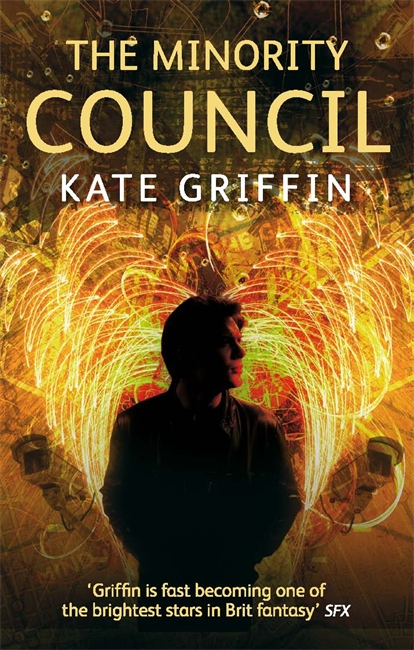
Since writing the above a couple of minutes ago, I've discovered the following book which I'm now going to order. I found it by typing Urban Fantasy into Google Images which came up with thousands of book covers.

(And how could I have forgotten to mention Jim Butcher's series, or Simon Green's Nightside series?)