Showing posts with label Alan Moore. Show all posts

Monday, 18 November 2013

A COLLECTION OF BRIEF REVIEWS FROM AMAZON

5* Transcends criticism-


But is not beyond it. What I mean by that is that if you've seem Peter Jackson's Lord of the Rings trilogy then you know exactly what you're getting. More or less. This is lighter in tone -it is based on a children's book after all- and includes songs sung by the characters (like the dwarfs). You know that it's going to be Jackson's version of the book too as he takes additional characters and events from various Tolkein-written sources plus original input from his writers. So to complain, as some certainly will that it's a bad thing to include material that is non-canonical to the original book, is entirely missing the point. He hasn't padded out a shortish kids book, he's extended it and done so extremely well.

What we get here, as we did before, is a magnificent cinematic fantasy experience where Jackson creates a completely convincing magical environment -aided, it has to be said, by the scenery of perhaps the most beautiful country in the world. I avoided seeing this at the cinema because I wanted to wait for the extended edition. Now I'll be queueing at the multiplex door for Part 2.

And, yes, the extras are all you ever wanted and possibly more.

Just a word of advice to buyers who are as dim as me. The 2-D version is on disc 3, Discs 1 & 2 contain the 3-D version only. It took me a few frustrated minutes to figure that out. But I'm old and that's my excuse.


4* Deranged

But in a good way.

Also in an often amateurish way too. But there's a loony enthusiasm pervading the mostly frenetic numbers. There are even some which are actually musically accomplished such as Storm Warning by Mac Rebennack (who would reinvent himself in the 60s as Dr. John, as if you didn't know). This is largely fun dumb music and, hey don't get me wrong, that's praise.

4* A feast for Fifties guitar fans.

Um, that was the review, okay? No? A little more then.

It hits most of the high spots so any avid fan of the music is already likely to have the best of the tracks here, though for a dabbler like me, it's excellent. Indeed it was worth getting for my favourite surf instrumental ever -Pipeline by the Chantays. It also highlights just how good The Shadows were in comparison to the competition. Good driving music as all the tracks are pretty short.

3* Not quite so fashionable

Considering that this is set in the fashion industry, of a sort, this is distinctly unglamourous and, in fact, downright ugly thought that, I suppose is part of its intent. Set in a city which reminds me of the perpetual night-shrouded locale of the excellent film Dark City, this is a grim read. The art, while accomplished and effective, is not attractive to look at.

The story, being by Alan Moore, is of course effective, particularly with its motif of illusion and reality which is best exemplified in ambiguity of the sexual identities of two of the story's main characters. However, it's worth remembering that Moore wrote this as a film script and it has been adapted as a graphic novel by someone else -Antony Johnston- so the reader is not getting a graphic novel by Moore as one would normally consider it.

Ultimately it's a bleak depressing piece and one which I believe will come to be considered as one of Moore lesser works. Read it if you must but make sure any sharp objects you own are locked away.


5* The best book about Alan Moore to date.

Okay, I haven't read the academic American texts about the world's most famous graphic novelist but I have read the more accessible ones and this really is the best. Unlike the most recent biography (Alan Moore: Storyteller) by one of Moore's mates, this isn't authorised and author Larkin is prepared to delve into some of the more controversial aspects and in detail.

There's as much about Moore's relationships and attitudes towards the comic book industry as there is about the comics/graphic novels themselves. Just one example: there is a very detailed exploration of Moore's widely publicised dispute with DC Comics which the author looks at from both sides and attempts to evaluate the situation. He also discusses Moore's possible motives for his reactions to a variety of issues. So what makes this book stand out above others published to date is that this is as much about Alan Moore the man as Alan Moore the writer, something very much missing from the other title I cited and which I noted in my review of it here on Amazon. Actually, the two books complement each other quite nicely.

That said, it you only gotta buy one book about Alan Moore then this is one: perceptive, witty, and highly readable it's worth every penny.

Perhaps a little surprisingly, the man himself has given it a tacit nod of approval.

Post Script: Coming Soon.

Maybe. If I feel like it. After I've had a chance to digest them properly.

THE WATERBOYS: Fisherman's Box.
The complete Fisherman's Blues sessions 1986-88. A massive 6-CDs. Expect an effusive review.

BUFFALO SPRINGFIELD: Box Set.
A mere 4 CDs with a shitload of demos and unreleased alternate versions. Previously released in a more expensive edition.

Thursday, 5 January 2012

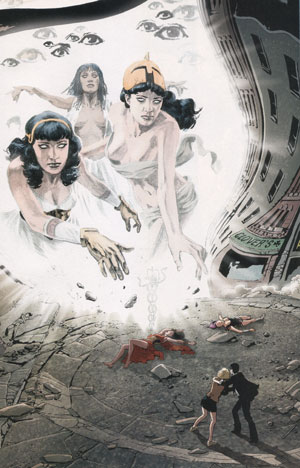
GRAPHIC NOVEL: ABSOLUTE PROMETHEA VOL.3 by ALAN MOORE & J H WILLIAMS111 (DC, 2011)


This deserves a much better review than I can give it. In terms of story, Promethea isn't that complicated, in terms of ideas it's certainly Alan Moore's most philosophical work. Or perhaps that should be mystical or metaphysical.

Sophie/Promethea have returned from heaven only to be forced into a fight with her friend Stacia/the Grace Branagh Promethea incarnation. After a trial in the Etheria, Sophie goes on the run and refuses to invoke Promethea who will end the the world. Hounded by the FBI and hunted by Tom Strong, Sophie becomes Promethea and ends the world. Of course that isn't the end of the story.

Volume 3 returns to the more accessible narrative of the first volume and is a wild exciting ride which also resolves the fates of the many supporting characters by the penultimate chapter. The last chapter is something else again and has to be seen to be believed. Whatever you may think of it, it's certainly unique.

What is pretty much inarguable is that it's his most beautifully illustrated series and one which places the most demands on the artist; though I'm sure that Linda Gebbie on Lost Girls has her adherents. J. H. Williams 111 (who came to my attention with Chase back in the 90's) does a phenomenal job using a range of artistic and design techniques without ever losing sight of the narrative. On that level alone, I'd argue that it is one of the finest graphic novels ever. One minor but engaging and amusing part is how Williams deliberately copies the style of the artists who drew characters from other ABC titles, often simultaneously in one panel.

I've criticised the lack of extras in previous volumes, particularly the first, but I have no complaints (well, just a couple) about this one. Nothing from Moore but no-one expected that. There are the complete Little Margie in Magic Misty Land (Moore's tribute to Little Nemo In Slumberland) illustrated by Eric Shanower, some Promethea-related bits and pieces from other ABC comics (including an extract, but alas not the complete episode, from Tom Strong's view of the end of the world), Williams writing about visually creating (drawing seems such an inadequate in the context) Promethea, Moore's script for chapter 29, and a half-size replica of the poster version of the final chapter.

And that is it, the conclusion to one of Alan Moore's finest graphic novels. Yes, these three Absolute volumes are expensive but they're worth every penny. 

This review has just been submitted to amazon.co.uk and amazon.com.

Wednesday, 27 July 2011

BOOKS: GARY SPENCER MILLIDGE: ALAN MOORE, STORYTELLER

An Amazon review. 4 stars.
Title: "I come not to bury Caesar, but to praise him."

In other words, don't expect anything in the way of criticism or of critical analysis of Moore's works except for those expressed by Moore himself. You won't find a bad word said against the Great Man except, of course, for those uttered by himself. This is a clear work of hagiography a word which is defined as "a biography of saints or venerated persons" and "idealising or idolising biography" and I certainly think Alan Moore fits into both categories. Once you accept that, Millidge (a long-standing friend of Moore's) has done a pretty good job.

(Incidentally, don't get me wrong. I am a big fan of Alan Moore's work and have been since the days of Warrior. I have many of the original comics [such as Swamp Thing and Watchmen] and also have them in absurdly expensive editions as well. Hell, on the wall just above my head I have an original page of Watchmen artwork! I do think he's something of a genius who revolutionised the comics industry. But I don't think the sun shines out of his fundament and am of the opinion that he may be somewhat curmudgeonly when he feels he's been slighted.)

That said, for what this book is which is a survey of Moore's work, its origins, how it came to be created, and his battles with publishers, it's hard to beat. It's certainly authoritative as Millidge was pretty much able to consult with Moore on anything and everything to do it. Visually, it's a feast with massive amounts of rare or unpublished material, including family photographs. It's also highly readable. For anyone wanting to know about Moore's writing and work in other media this is terrific.

Where it does skimp, however, is about Moore the man, the father, the husband, the friend. We never see any real glimpse of the private face of Alan Moore. Then again, I suppose, the title is Alan Moore Storyteller not Alan Moore the Private Life. I mention this because I feel that this unseen aspect is also a part of the artist, a more subtle perhaps even undefinable part but a part nonetheless and that's why I'm only giving it four stars.

But for what it sets out to do it does superbly and is (despite my minor reservations) unreservedly recommended to anyone interested in Northampton's greatest son.

Saturday, 19 February 2011

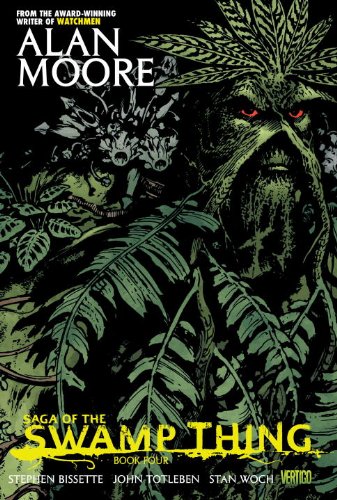
GRAPHIC NOVEL: ALAN MOORE: SAGA OF THE SWAMP THING VOL.4


As far as I'm concerned, it's Moore's Swamp Thing which had the biggest impact on comics creators at the time, not Watchmen, not V for Vendetta, and not the little seen Miracleman, brilliant as they all were. Moore's swamp Thing came out of the blue and transformed the conception of what could be done in a commercial comic published by a major publisher. Without Swamp Thing, Moore's impact would be considerably less as it gave him the clout and credibility to enable DC to publish Watchmen and reprint and complete V for Vendetta. This series is a major event in the history of contemporary comics, an impact which is unparalleled by anything that came before. The terrain of commercial comics was changed forever by it.

This volume contains eight issues which culminate the climax and conclusion of Moore's American Gothic series. The climax confounded many readers at the time, despite the constant (and guided by new character John Constantine) foreshadowing of it. Here the ongoing story is the thing with only three standalone issues, one a scathing attack on gun culture, another dealing with a serial killer which was later developed and amplified by Neil Gaiman in The Sandman.

Speaking of whom, he is one of two writers who contribute introductions to the book. And here is where my grouch wakes up and gets ugly. The presentation of this series is not all that it could be and that it deserves. The paper quality is poor, little better, if that, than the paper of the original comic. The introductions were written for earlier paperback reprints of this series back in the late 80's. Something new would have been nice. Also the 8 issues per volume seems a little meager to me.

But don't let that put you off. It is what it is and it's likely to be the definitive presentation of Swamp Thing for some time so get it while you can. Every comics fan should have this series.

Sunday, 23 May 2010

BOOKS: ALAN MOORE -TOM STRONG DELUXE EDITION BOOK 2

 An Amazon 5-star review.

Celebration of the super-hero comic.

While clearly having its own individual voice, as if anything written by Alan Moore wouldn't, this is a tribute to the comic book and to super hero comic books in particular. The range of styles Moore manages to adopt, while never being less than clearly Tom Strong is impressive and never less than great fun. Opening with a time travel paradox story, which manages to include funny animals and also reference the Shazam Captain Marvel, Moore moves on to a 3 short story Science Fiction anthology comic which also includes a Wally Wood EC pastiche before a chapter which echoes the Fantastic Four. We then have a 3-part alien invasion story which brings back several characters from the previous volume including the 3-eyed alien abductees and introduces a new cowboy hero. Following another short story chapter which has one illustrated by legend Howard Chaykin, we arrive at the book's most impressive sequence, an alternate reality in which Tom Strong's father was Tomas and he becomes Tom Stone. The mixed-race Stone has a different attitude towards things and actually befriends Tom Strong's nemesis Saveen, convincing him to become a science-hero and his partner. Stone marries Greta and Saveen marries Dahlua and the scene is set for tragedy as the title of the third part 'Crisis In Infinite Hearts' suggests. This is an emotionally powerful tale and far less playful than the other stories as it is played completely straight to reveal another side of comics that Moore is celebrating. The final story is a two parter written by Peter Hogan and is fine but much less impressive than the one which preceded it.

Throw in a 20 page Chris Sprouse sketchbook and we have in the slightly oversize format one of the most fun packages around. The Tom Strong stories are Moore being playful and having a lot of fun but please note that this isn't the same thing as being flippant. There is real heart and emotion here which gives the stories a depth which would be lacking and otherwise reduce them to no more than pastiche. It may not rank as essential Alan Moore but you'll be missing out on a great deal of sheer enjoyment if you don't give it a try. 

Monday, 2 November 2009

ALAN MOORE AND AMERICA’S BEST COMICS: initial thoughts towards a more extensive article.


 Alan Moore & Melinda Gebbie on their wedding day.
I’ve been reading –well, no, not reading, re-reading- quite a few Alan Moore graphic novels recently for the simple reason I’ve been buying them in attractive and expensive hardback editions. I have all the original comics and in some case trade paperbacks, but they are just so good it’s nice to have them on good quality paper, sometimes with enlarged artwork and occasionally re-coloured. The latest book to arrive is volume 1 of Tom Strong the Deluxe edition from America’s Best Comics, an imprint of Wildstorm Comics which is now an imprint of the mighty DC.
And thereby hangs a tale.
Some time ago, Moore fell out with DC over, we were informed at the time (though it’s widely believed there were other reasons), there imposition of the ‘For Mature Readers’ tag, and he vowed never to work for them again. For several years, Moore worked on his own projects including, with Eddie Campbell, From Hell from Tundra Press and, with his future wife Melinda Gebbie, on Lost Girls. He also had to earn a crust and did a fair amount of work-for-hire for Image and the independent imprint, which was distributed by Image, Wildstorm. Most of his work for hire stuff was, while competent superhero stuff, relatively minor Moore. The one exception being his re-working of the Superman-clone Supreme into a genuine riff on Superman in a seemingly sincere homage to the character.
Moore then struck a deal with Wildstorm to publish America’s Best Comics, his own imprint and he would write –and this news frankly staggered comics fans- four monthly titles. Needless to say it wasn’t long before he fell behind. But then, if memory serves me correctly, almost before ABC were published, the owner of Wildstorm sold it to DC though it was nominally independent of this. Moore only continued on the understanding that he would have nothing to do with DC and because it would have resulted in financial hardship for the artists who had contracted to work with him. And, for longer than most people expected, this worked and it resulted in Moore producing some of his best work for years.
The titles were: 
Tom Strong 
Promethea 
Top Ten
and  
Tomorrow Stories the anthology title which was the weakest of four being a combination of homage (Greyshirt, a Spirit clone), humour (an absurd child genius), and satire (The First American, which was painfully unfunny), and a Plastic Man figure made of sentient ink
What I haven’t mentioned so far is that all these stories are set in the same ABC universe –I’ve already mentioned that the final issues of Promethea and Tom Strong are linked- and there are references throughout all of them to characters or events from other titles.


Promethea turned out to be the most ambitious, successful and beautifully illustrated of the four thanks to the amazing talents of JH Williams III. Significantly it’s the only one to have received the Absolute treatment (see my review on Amazon for details). But the other titles weren’t peanuts either.


Top Ten is, on one level at least, an amazing job. Set in a city where everyone has either super powers or enhancements to simulate them (either scientific or magical), where aliens and travellers from other worlds, dimensions, parallel universes are regular visitors, where sentient robots (‘clickers’) are the despised underclass, the focus is on an elite group of police persons. Moore managed to juggle all this, a large squad of key characters, subplots and a central plot in a marvellous display of invention and wit. It didn’t last a dozen issues which is hardly surprising because it must have taken an enormous amount of work. It also spawned a prequel in the form of an original graphic novel The 49'ers.

But, Promethea aside, it was Tom Strong which proved to be the most endurable of the ABC titles. It lasted as long as Promethea (indeed the final issues are closely linked) and even had a lesser spin-off anthology title, Tom Strong’s Terrific Tales,  written by Moore plus diverse hands which, for a while, alternated with the main title (later issues themselves written by others) on a bi-monthly schedule.
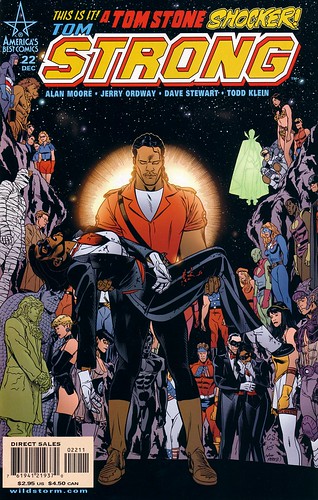
Tom Strong was Moore’s riff on the superman, but not Superman, derived more from the Philip Wylie figure in the novel Gladiator. He does have considerable strength, an extremely high intelligence, and a high resistance to physical damage but he is very human.  Tom Strong is a humane celebration of all that is fun in superhero comics which ranges from domestic crises, time travel, parallel worlds, supervillains, space travel, Nazis and more. Tom is 99 years old as the series opens and the stories often have flashbacks to earlier adventures. Tom always tries to resolve conflicts without violence and by using reason. His wife is black (though this is never an issue except on one occasion), indeed there is a great deal of implicit social commentary which is always there either as text or subtext resulting in this being the most human of superhero stories. I the course of the series, Moore uses just about all the tropes of the superhero which have been used during the genre’s history by the uses of flashbacks to incidents in Tom’s earlier life which are often illustrated by different artists. There is a wonderful parody (see below) of men’s magazines on the cover of the issue where Tom encounters Ingrid Weiss –a sexy Nazi superhuman- in Berlin as the Russian attack. While the super hero genre is often parodied in these pages it is done with affection. 


There’s an elephant in the living room and I’ve no doubt that anyone aware of the ABC line (hello, Ian P) has already spotted it.
The first title to be actually published under the ABC imprint was The League of Extraordinary Gentlemen. This was to outlast the imprint itself and eventually as, unlike the other titles, it was owned by Moore and artist Kevin O’Neill, the latest volume is being published by the independent Top Cow and not Wildstorm/DC.
Probably the most commercially successful (it spawned a widely disliked –though I’m quite fond of it- movie with Sean Connery), it takes the premise that all fictional (including books, comics, tv and cinema) characters exist in the same universe. This ultimately makes for an incredibly dense reading experience as you try and catch all the references. Indeed there have been three professionally published books by Jess Nevins devoted to explaining them. They are a wonderful read but I’m not prepared to tackle them in an essay just yet.

While writing this relatively brief piece, it's occurred to me that Moore might be more interestingly examined by looking at the different themes or types of graphic stories he's written to uncover underlying links between otherwise disparate title such as that one above and, perhaps, Lost Girls.
Keep watching the skies, and then this blog.


Friday, 30 October 2009

RECENTLY ACQUIRED: CD/DVD/GRAPHIC NOVEL


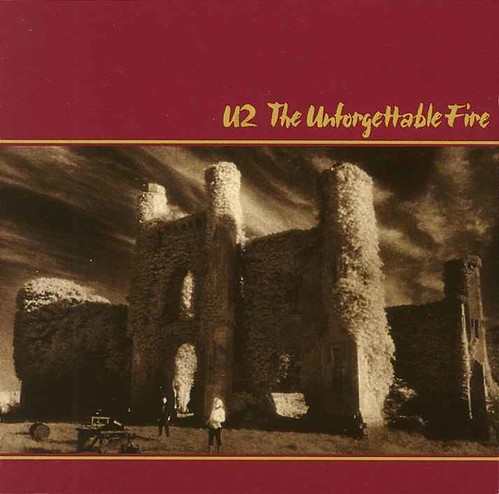
This is the super deluxe everything but the kitchen sink lavish expensive £25 plus change (pre-ordered, the price has since gone up by £7) edition. It's the remastered orginal album, the alternative & unreleased & live stuff, and the DVD which includes their Live Aid show which I vividly remember. I'm playing the main album as I type and it's wonderful. But then I'm, as you probably know, a big fan of U2, well the earlier stuff. Though I have most of their later albums, it's the early period I prefer and in recent months I've been picking up the special, but not super deluxe, 2-disc editions of Boy, War, October, and The Joshua Tree.

It's all magical stuff. Bono may sometimes come over as a prat but he has one of Rock's most distinctive and effective voices. The Edge is a genius on guitar in terms of what he does with them and the rythm section is first rate. When you add a string of heartfelt anthemic memorable songs and brooding mysterious slower ones, there is nothing else quite like it in Rock.


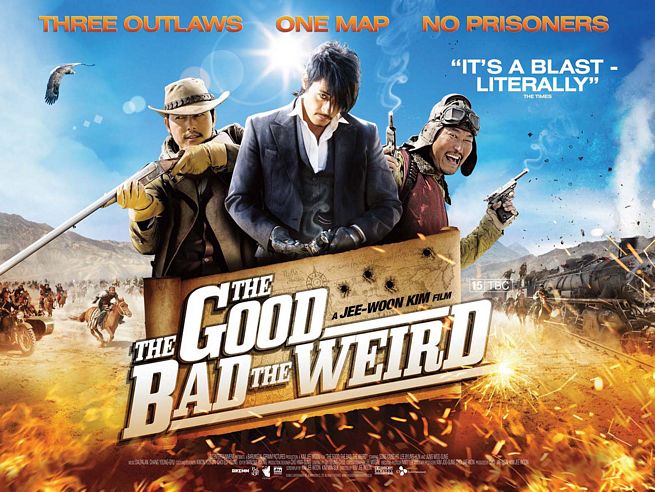
I haven't seen this yet but I'm really looking forward to it, a sendup of -well I don't need to spell out that, surely?- set in Mongolia in the 30's which has garned rave reviews from all over the place and the trailer I saw looked pretty damn good. Gonna watch it tonight.


Of course I have the original comics but this is one of those I've decided to have in a nice edition. This one, just released, is the first of three in a deluxe edition. This means it's bigger than the standard hardback from DC but not by half the price as fancy as the Absolute editions. I'm working on an article about Alan Moore for this blog and cover Tom Strong in detail so I'll save any further comment until then.

Wednesday, 14 October 2009

GRAPHIC NOVELS: ABSOLUTE V FOR VENDETTA, ABSOLUTE PROMETHEA VOL.1

T
The following are two reviews, both rated 5 stars, reprinted from Amazon UK.

I would say, as an assumption, that people who buy DC's expensive Absolute editions do so because they want a definitive edition, printed on good quality paper, in an enlarged hardcover with dustjacket and slip-case, and extras such as introductions, unused unseen art etc, of their favourite comic books. I know I do and can see, from where I'm sitting typing, Absolute editions of 'Crisis on Infinite Earths', 'The New Frontier', Dark Knight, Batman: Hush, the four Sandman volumes, Ronin, and now V for Vendetta. I'll get back to this in the second half of the review.


V for Vendetta is, along with Marvelman/Miracleman, the first of Alan Moore's major works in the field of comics. It was begun at the time of Moore's early feelings of unease at the UK's ruling Conservative Party and concluded when those feelings had coalesced into outright disgust. Like the best Science Fiction, the best comics reflect concerns of the time in which they were written -and, yes, I'm aware I'm bringing together a genre and a medium- and V for Vendetta is political Science Fiction. In his introduction, written in 1988, Moore expresses his anxiety for the immediate future becoming a Conservative-led right wing intolerance as Margaret Thatcher forsaw a Conservative Britain into the next millenium and mentions that he's considering leaving the country. In the event, the Conservatives barely lasted until the middle of the 90's and Britain stands proudly, for all its flaws, as one of the most liberal, open. and tolerant of western societies. If you just limit this to England, I would argue, on evidence, that this is the most liberal, open, and tolerant of western societies. And Alan Moore is still ensconced happily in Northampton which, he argues, is located in the very centre of England.


Yet, perhaps surprisingly, V hasn't really dated at all and its fear of fascism remains eternally valid. If you doubt that, then I refer you to the racist outpourings of the British National Party. V remains one of Moore's genuine masterpieces, erudite, compassionate, insightful, obsessive; all enhanced by David Lloyd's sympathetic distinctive 'realistic' artwork (with its echoes of British black and white weekly kids adventure comics) which is possessed of a great clarity and enhanced by a subdued colour palette. Perhaps what is even more amazing is that in the era of Ronald Regan, DC published a comic in which the hero is a psychotic anarchist whose intention is to destroy the existing social order.


Now, as for this edition, inevitably given the widely known dispute between Moore and DC, there is no new contribution by Alan Moore. A shame as it would be fascinating to read but, as I said, inevitable. Compared to other Absolute editions -the four Sandman volumes are packed with them, Crisis on Infinite Earths required an additional book- there is relatively little; a few sketches, a couple of reprint pieces by Moore, the inclusion of minor material previously printed in only Warrior magazine, panels blown up to full page pieces, all very nice but doing little to enhance the original material. Not that it matters as this is a beautiful edition of one of the masterpieces by Alan Moore the greatest comic book writer ever. How could you resist?


Before I leave you, I'll just mention the soon to be published Absolute Promethea vol.1. This is a work which I feel will grow in reputation and I'm looking forward to receiving my copy of this, one of Moore's most optimistic works. I'm not expecting any new contributions from the Great Man but I do hope to see lots of gorgeous unpublished art by the brilliant J H Williams. I'll let you know.


In my recent review of the Absolute V for Vendetta, I wrote that Absolute Promethea vol1. would be arriving soon and I'd let you know what I found. And here it is, two months sooner than I expected.

And it's extremely disappointing in terms of it being an Absolute edition. Usually these things are packed with extras. This has none. Nothing at all. And I'm not counting an introduction by Alan Moore (of the fictional history of Promethea) which probably (I can't honestly remember but it won't be original to this edition) appeared in an issue of the comic, and neither am I counting the one page afterword by Brad Meltzer. I was hoping for additional artwork by J H Williams 111, preparatory sketches and all that stuff. Nothing. Total disappointment. Maybe it's being saved up for the next two volumes. I can only live in hope.

And now for the good news.

The illustration on the box is of Promethea (there's a surprise) but printed in gold and it looks gorgeous. The cover on the book (no dustjacket, no big deal) is a wraparound by Williams and looks original to this book. The artwork inside benefits immensely from the larger format and the high quality paper. It is absolutely gorgeous and I'm quite prepared to state categorically that I believe this to be best illustrated of all Alan Moore's comics work. This isn't to denigrate any of the other artists who've worked with Moore. Moore has been very lucky in his career to have been able to use for his major works (with odd exceptions such as some issues of Miracleman) artists who have fitted his vision to perfection. But Promethea is just bloody beautiful.

This is appropriate because the story itself is an exciting, colourful, mysterious and hopeful one. I'll be sparing with the plot summary as I don't want to spoil anything for those discovering Promethea for the first time through this edition. Essentially: young student Sophie Bangs becomes the latest incarnation of the supposedly mythical Promethea (who, trust me, is not a Wonder Woman clone as thought before this series originally appeared). First, she has to survive the attention of magical enemies and then learn just who and what Promethea really is. The journey proves as unexpected for the reader as it does for Sophie.

For me, Promethea is one of Moore's finest and most imaginative creations and despite the lack of extras, this first book of three comes with my highest recommendation. This ranks with Watchmen, V for Vendetta, and Lost Girls to make an essential quartet of graphic storytelling.
Reblog this post [with Zemanta]

Saturday, 6 June 2009

GRAPHIC STORY: Alan Moore & Kevin O'Neil: The League of Extraordinary Gentlemen: 1910.


On the first reading, I reacted pretty much the same as some Amazon reviewers, dashing off a two-sentence synopsis to a friend and telling him not to bother.

On the second reading I began to appreciate it more though, although readable, it's actually less accessible than some of Moore's other works (the first two LOEG volumes for example). I can understand why other reviewers were disappointed because the League appears relatively ineffectual in the story which itself is very separate from the other plot strand until the very end. We expect our heroes to, if not always win, at least have a significant effect. Here they are misled and ineffective.

The other part of the story concerns what happens to Nemo's daughter in London's East End, and not very pretty it is either, told in the manner of Brecht's Threepenny Opera with her as Jenny Diver and Macheath as a returning Jack the Ripper.

Operas tend to have prologues and this LOEG volume is essentially the prologue to the new series. What happens here will resonate in later volumes later in the century so it's certainly unfair to dismiss future parts on the basis of the first. However I can understand people who didn't like The Black Dossier (I do, a lot), not liking this as it's more in keeping with TBD's tone than with the first two books.

I particularly liked the Prisoner of London, trapped in space but not in time.

There seems to be some confusion over the identity of Quartermain Jnr. As far as I am aware he is Allan Quatermain made immortal by going, with Mina Murray, through Ayesha's fire. Oliver Haddo is the equivalent of Aleister Crowley in a W. Somerset Maugham story.

This review has also appeared on Amazon UK.