Showing posts with label Graphic Novels. Show all posts

Monday, 11 March 2013

MY BOOK ROOM

Finally, at the age of 64, I've got something I've wanted for almost all my adult life -a room to tidily display my book collection. I call it my book room and sometimes I call it Fifi's room for reasons to be mentioned later. It's taken me four weeks to get it almost right. I say almost because financial constraints inevitably force limitations.

Okay, going clockwise from the outside wall we encounter-

-Billy the White Shelving Unit from Ikea which was put together from kit form by one of my several friends who are called Ian. It's an eclectic selection. The bottom two shelves are full of books about comics, graphic novels, and their creators. Above them are digest-sized graphic novels and a few novel novels. Then there's music shelf -books about music,  mostly the Blues, along with three massive box sets. Add some more graphic novels selected by size and a top shelf of various non fiction which includes political diaries by my retired MP Chris Mullin, the English language, and Buddhism.

These weren't built as bookshelves but I'd be willing to bet that you'd never guess what they orginally were for even though it's sort of obvious when you see it. In the mid-90's Sunderland Public Libraries decided to get rid of vinyl albums and, rather than just chuck them out, I was offered the chance to take the display stands to convert as book shelves. In their original state, they sat horizontally on top of a waist high cupboard and the lps were placed standing up in them.

The contents, with one exception, completely consist of graphic novels, nearly all my favourites with a number of them in expensive  oversized editions -note The Sandman series, Watchmen and V For Vendetta.


This is a converted cupboard with pipes boxed in and shelves added. Mostly it houses my DVDs sorted into rough categories like TV, Science Fiction & Fantasy, Asian movies, etc.


 And here we have Billy the Brown shelves. I was so pleased with the previous one that I bought these to replace a couple of smaller and crappier cheap units. I even, gasp, put them up myself. This may not sound much to you but I was the kid who got chucked out of Woodwork at school because I might hurt myself and my dexterity and practical skills haven't improved such since then. But I watched t'other Ian putting up the white unit and it didn't seem that difficult. And it wasn't and I was really pleased with myself until I realised that on each unit I'd put one piece in the wrong way round and couldn't fix it without pulling them to pieces and starting nearly from scratch. You won't be surprised to learn that I said 'sod that' to myself. You can just see which ones they are even on this photo but it could be worse and I did put them both together they way they were supposed to go.

The top two shelves on the left are books about tv and cinema, all Science Fiction, Fantasy, and Horror related as anyone who knows me would expect. The rest are graphic novels.


 An old unit with its twin being in the kitchen and, like it, is Science Fiction and Fantasy, including a shelf full of Terry Pratchett. Unlike the unit in the kitchen, I can honestly say I've read all of them bar one.

 This is a converted cupboard containing comics I bought before I went completely over to graphic novels, all my Horror DVDs including a large (and nearly complete) collection of Godzilla movies, plus Buffy, Angel, Babylon 5, and X-files sets.

One the bottom shelf you may have noticed Fifi. Except when she dares to venture downstairs to the living room where rarely moves from the padded top of an armchair, she spends the rest of the time here which is why I sometimes call it Fifi's room. The reason she more or less lives here is because one of my other cats chases her.

 I love just going into the room at looking at it all.

Now what can I put in the middle of the room?

Sunday, 16 December 2012

GRAPHIC NOVEL REVIEW: FAIREST vol.1 WIDE AWAKE (2012)


Previously published on Amazon as a 5* review.

This Fables spin-off is not only the best of Fables spin-offs, it's actually better than Fables itself. The idea behind it is to tell background stories of the women of the Fables universe with tales of varying lengths. In this first volume we have a 6-parter and single issue story.

Wide Awake, the main story is an origin (the real one) of Sleeping Beauty aka Briar Rose and it's ingeniously done. Set after the fall of the Adversary in the main continuity, Ali Baba the self-acclaimed Prince of Thieves, frees an effrit, not a djinn as he hoped, who can only offer him knowledge rather than three wishes. The effrit, a highly intelligent and sophisticated imp, for reasons of his own encourages Ali to steal Sleeping Beauty's slumbering body from goblins who've captured her only to find that there are two sleeping women, both of whom he awakens. Unluckily for Ali, one of them is the Snow Queen, former right-hand woman for the Adversary, who has a penchant for listening to stories and she finds that of SB's most interesting.

What we have have here is, written by Fables mastermind Bill Willingham who is at the very top of his form, a delightful story itself, packed with wit, invention, action, and romance which expands on the background to the Fables stories. 

The art by Phil Jiminez is to die for. He's emerged from his George Perez lookalike phase as a sophisticated artist in his own right. His men are handsome, his women gorgeous, his monsters and villains hideous. And I must add a note of appreciation for the rich and subtle colouring of Andrew Dalhouse which does so much to enhance the art. It's a disgrace his name isn't on the cover.

 
Set in the 1940's, the single-issue story is sepia coloured noir written by Matthew Sturges and illustrated by Shawn McManus. In it, a heavy-smoking Beast playing a hard-boiled private eye is hunting the Lamia, a serial-killing Fable, who has arrived in Lost Angeles. It's neat, nicely done and has a killer twist I wouldn't dream of spoiling.

If the creators of this title can maintain the standard set here, then us lucky readers are in for a feast of delights in the near future.

Saturday, 29 September 2012

GRAPHIC NOVEL REVIEWS: MORE DC NEW 52s


Resurrected with a vengeance, a 5* Amazon review.

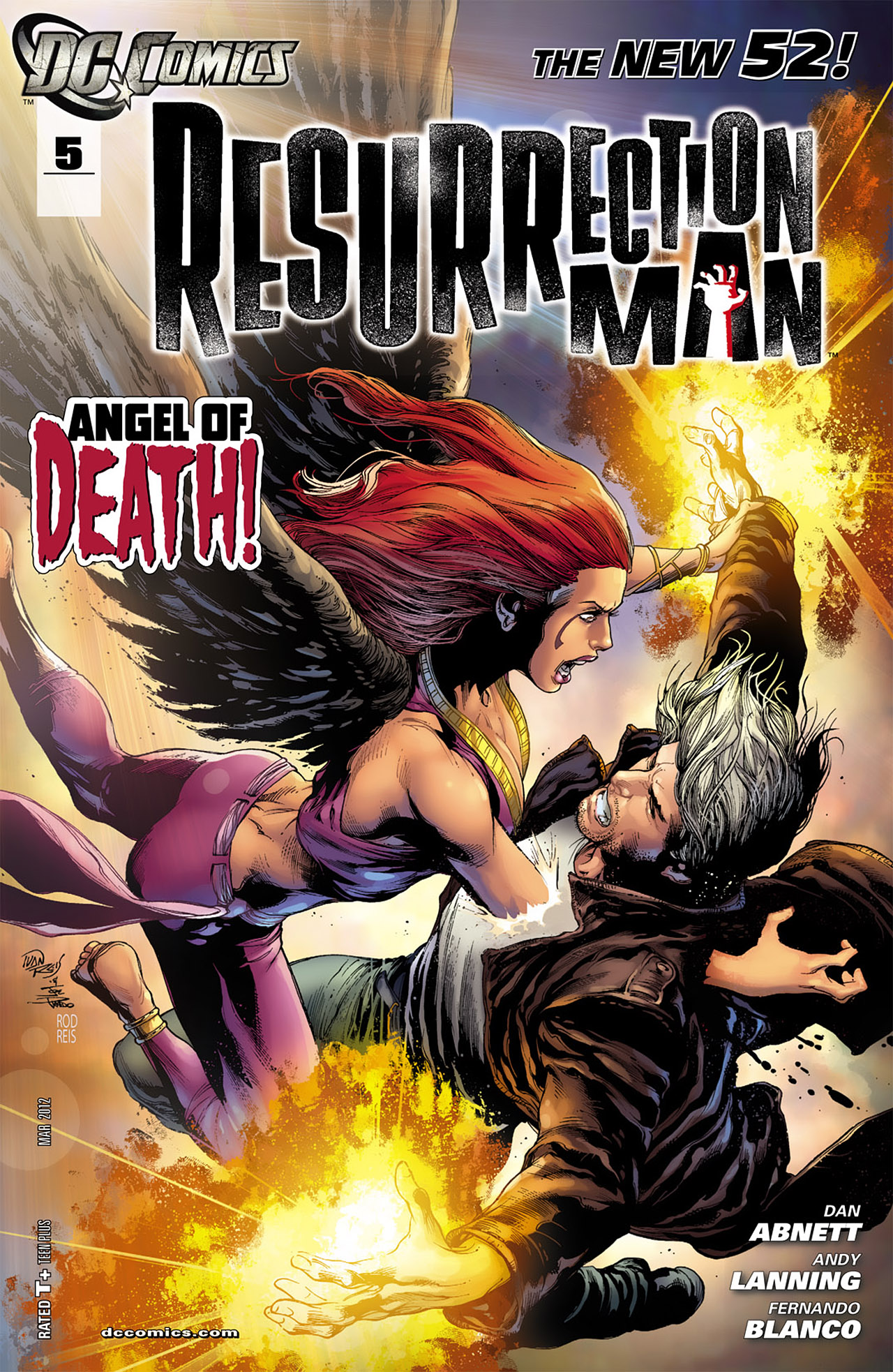
The original run of this title was one of my favourite series of the 90's and now it's back with its original writers Dan Abnett and Andy Lanning so there's no way I was never going to buy this one and I haven't been disappointed.

Unlike some of DC's New 52, it doesn't seem to have squashed the original continuity or some semblance thereof, such as Batman, into the previous five-year pre-publication appearance. No, this is a brand newish Resurrection Man. Our hero Mitch Shelley is pretty much the same person but he has a new and rather unpleasant origin; he appears to have a compulsion to go to particular places where he's needed; Heaven and Hell want him dead and they are both decidely scary. Those loveable sociopathic female hit women Bonnie and Carmen aka The Body Doubles are back but also with a new origin, a teleportation device, and super powers -ouch!

In this seven issue collection we find Mitch fighting a scary angel on a crashing passenger jet, visiting an old people's home, Arkham Asylum, Metropolis, and more. The action never stops, Bonnie and Carmen never give up, the revelations keep coming, and the pace never lets up. This is enhanced by the dynamic detailed artwork of Fernando Dagnino which is just terrific.

How good is this book? I wanted to read it again as soon as I'd finished. That's how good this book is.

(Aside: I've been reviewing a lot of these New 52 titles and my ratings are a comparison of like to like. A 5* rating means it's as good as the best of current DC/Marvel superhero titles. It doesn't mean it's as good as, say, Watchmen or Love & Rockets. Just wanted to make that clear.) 


They aren't kid sidekicks. An Amazon 4* review

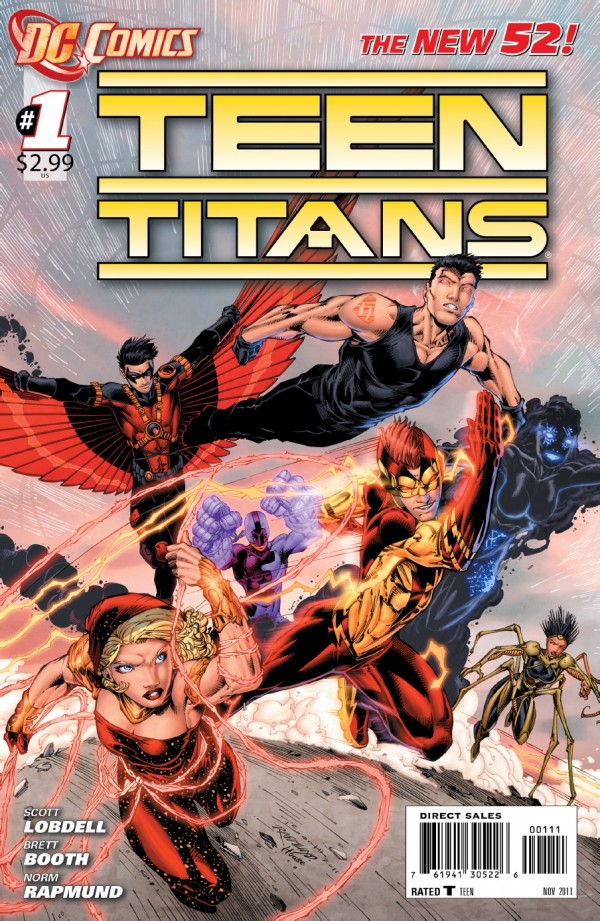
Unlike the TT's of previous incarnations in the old continuity, only Red Robin (Tim Drake) has any direct link to established superheroes. There's also a good idea as to why, in this first volume which is an origin story, these kids get together.

A lot of teen meta-humans have been appearing all over the world and causing a lot of trouble for the authorities. A sinister organisation called NOWHERE (it's an acronym but I'm too lazy to insert the dots) is kidnapping these kids for purposes unknown, but you can bet they aren't good ones. Red Robin has been investigating NOWHERE and blogging about the teenage meta problem. After escape an attempt by them on his life, he tracks down Cassie ("Don't call me Wonder Girl!") Sandsmark just as they attack her. Shortly after following up a lead, he encounters the insectile Skitter. By one of those curious coincidences that only happen in comics, Miguel Jose Barragan (the gay Mexican meta who calls himself Bunker) illegally hops aboard a freight train where he meets a disguised Red Robin with a cocooned Skitter and... And so on.

Amnesiac Kid Flash with a female meta called Solstice (count the number of times her name is misspelled by the letterer), who've escaped from NOWHERE, meet up with the other three and go to the rescue of Cassie ("Don't call...") who is under attack by Superboy.

All in all this is a very promising start to the series. The new characters, technically they're all new, have a lot of potential. The set up is a good one. Writer Scott Lobdell balances action, character beats, humour, and background information all very well so that you can't stop reading because you want to find out what happens next. Brett Booth's art manages to balance an attractive detailed style with just the right hint of cartoon to suggest the original Young Justice. The three letterers need to check their spelling which is a little sloppy at times.

Yet another success for the continuity revamp that is DC's New 52 which is providing the best mainstream superhero stories for years. 


There's nothing fishy about this Aquaman. An Amazon 4* review.

This series is among the most highly praised of DC's New 52 revamps and you aren't going to get any argument about that from me.

We meet an Aquaman in his prime and there are a number of mysteries about his previous life of which only some are revealed or hinted at. He's married to Mera, a mature no-nonsense woman who has less tolerance for fools than her husband, and they live in a lighthouse. Aquaman is a bit of a joke to people who very much underrate him except for those who see him (and Mera) go up against a race of hominid fish with the appetite of piranhas who attack a nearby coastal village.

The writer/artist team of Geoff Johns and Ivan Reis -two of the top people in their fields working in mainstream comics today- hit the mark every time. But don't take my word for it. Buy this book now and find out for yourself. I doubt very much if you'll regret it. 

Sunday, 15 July 2012

GRAPHIC NOVEL REVIEW: ATOMIC ROBO VOLS 4-6

Atomic Robo by Brian Clevinger (script) and Scott Wegener (art) (from small indie publisher Red 5 Comics) has become my new favourite comic. It is an all-ages comic containing the action science adventures of the title character. The self-aware Robo (as he's usually just called) was created in the 1920's by Nikolai Tesla and in the present is the owner of Tesladyne which specialises in advanced (and very dangerous) scientific inventions and saving the world. Robo's adventures can, therefore, cover a period of nearly a hundred years. Vol 4 is set in 1999, vol 5 in 1930, and vol 6 2011.

And basically it's mad as a box of monkeys but in a very endearing way.

Meet arch-enemy Doctor Dinosaur who believes he is a time-travelling genius dinosaur from the Cretaceous era. Robo (in their first encounter) spends an entire issue fighting while poking logical holes in DD's argument that he is any of these things. This is simply the funniest comic I have ever read. The dialogue immediately preceding the panel above has DD stating he's going to cut off Robo's head and post it to the US government. Robo asks how he's going to do this when they're on a desert island hundreds of miles from a post office. (Incidentally, DD is correct -it is a sentence. Robo doesn't always get it right.) 

This is from vol 4 Atomic Robo and Other Strangeness. A series of standalone stories set in 1999, they include vampires from a parallel world, Japan's Science Team Super 5, a ghost at Tesladyne labs, and the wonderfully deluded Doctor Dinosaur.

Vol.5 (the first I read) Atomic Robo and the Deadly Art of Science is set in 1930 when Robo is still a gofer for Tesla. Inspired by pulp thrillers, he tries to get The Tarot, a two-gun masked crimefighter, to allow him to become his assistant in an adventure which results in our two heroes and The Tarot's beautiful daughter battling against Tesla's arch-enemy Thomas Edison and Edison's very large robot.


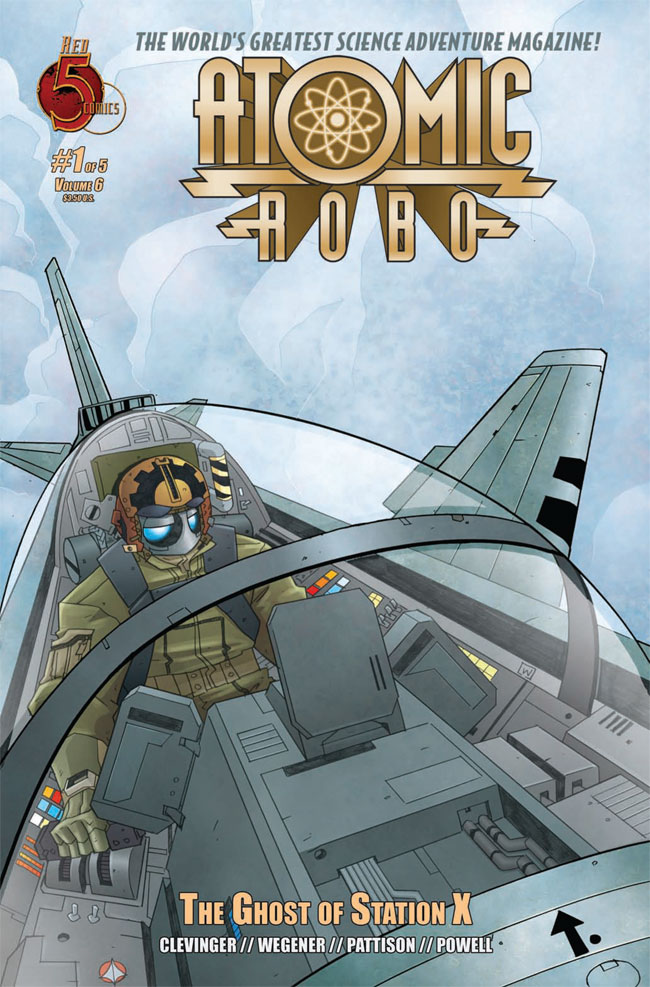
The Ghost of Station X is the 6th and latest collection. Robo and Tesladayne find themselves under attack from an enemy they can't locate. But what does this have to do with a vanished building at Bletchley, England, where Alan Turing, the tragic founder of modern computing, worked on the Enigma machine during World War 2? You'll be surprised.


This is an enormously exuberant series, far more clever and intelligent than the angular cartoony artwork would suggest. Robo himself is an engaging character being warm, witty and compassionate. It's simply the most entertaining comic I've read in a long time. Despite the all-ages tag, it isn't written down, rather it's written up. Ten year olds will enjoy it but on a completely different level to their parents. Greg Rucka, writing a puff piece (introduction), states he immediately gave it to his wife to read and then his 11 year old son (and presumably his servants if he has any -Lady Chatterly's Lover trial joke) and he was absolutely right to do so. Atomic Robo refreshes the parts of the imagination that other comics fail to do while allowing you to experience the sheer joy of Action Science.

So, you are no doubt asking, why don't I have the first three volumes in the series. Short answer: because they're all over £20 each and are out of print. A used copy of volume 3 is available for £49.95, a new copy for £1287.06. I think this last one might be a mistake and have emailed the seller to check. I'm hoping it might be £12.87 but realistically that's not very likely. I did manage to order a copy of Vol 2 for about £14.00 but was so excited I forgot to check the condition which is 'very good' which could mean anything.

Wednesday, 11 July 2012

BOOK REVIEW: THE ART OF HOWARD CHAYKIN by BOB GREENBERGER (2012)

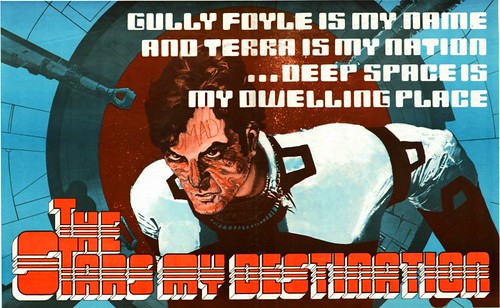
This is one of those reviews where I'm not sure where to begin. I can't start by saying that Chaykin is one of the greatest comics artists ever because he isn't -though he's pretty damn good. What he did do, however, is to write and draw American Flagg which is the greatest science fiction comic ever -I've reviewed the two-volume compilation elsewhere in this blog. He did this back in the early 80's before Alan Moore (who wrote a backup strip for it) became  ALAN (PRAISE HIS NAME) MOORE! and before Frank Miller released The Dark Knight Returns which cough borrowed cough the narrative/satirical info-dump technique from AF and then got widely praised for this 'innovation'. Perhaps not surprisingly, Chaykin doesn't have much time for Miller.

I could write a lot about American Flagg but I've already done that so I'll just say that if Chaykin had done nothing else he'd have earned a distinct place in the history of comics. Fortunately he did and this book explores all of it.

As an account of the work of a comic writer and artist, this is an excellent book. It's physically large, on glossy paper, with a vast amount of illustrations and an equally substantial amount of text. Structured chronologically, most of the written content derives from long conversations with Chaykin conducted over the course of a year. (This text is interspersed with comments from various peers which range from insightful and informative to 'my buddy Howie, wisecrack, wisecrack)'. This is followed by a checklist of everything Chaykin has had published, split into categories including comic books, strips, collected editions, etc. After this comes an eclectic forty page gallery of artwork. Anyone wanting to create their own The Art Of My Favourite Artist wouldn't go wrong using this as a template.

Chaykin started back in the early 70's as an assistant to people like Gil Kane. It's a comic business tradition of artists using assistants to do background work on panels and learn the trade that way and Chaykin continued this tradition. It's a form of payback and Chaykin always pays his debts. The impression gleaned from the book is that he's the sort of person that if you like you like a lot and if you don't you cross the street to avoid but that's probably your loss. While admitting he might be an acquired taste, his peers are unstinting in their praise for his professionalism, the honesty and insight of his criticism, and how he goes out of his way to be helpful. When it comes to his work, he's meticulous. If he agrees to write and draw a 28 page comic every month then that's the editor will receive and it will be the best he can do. 

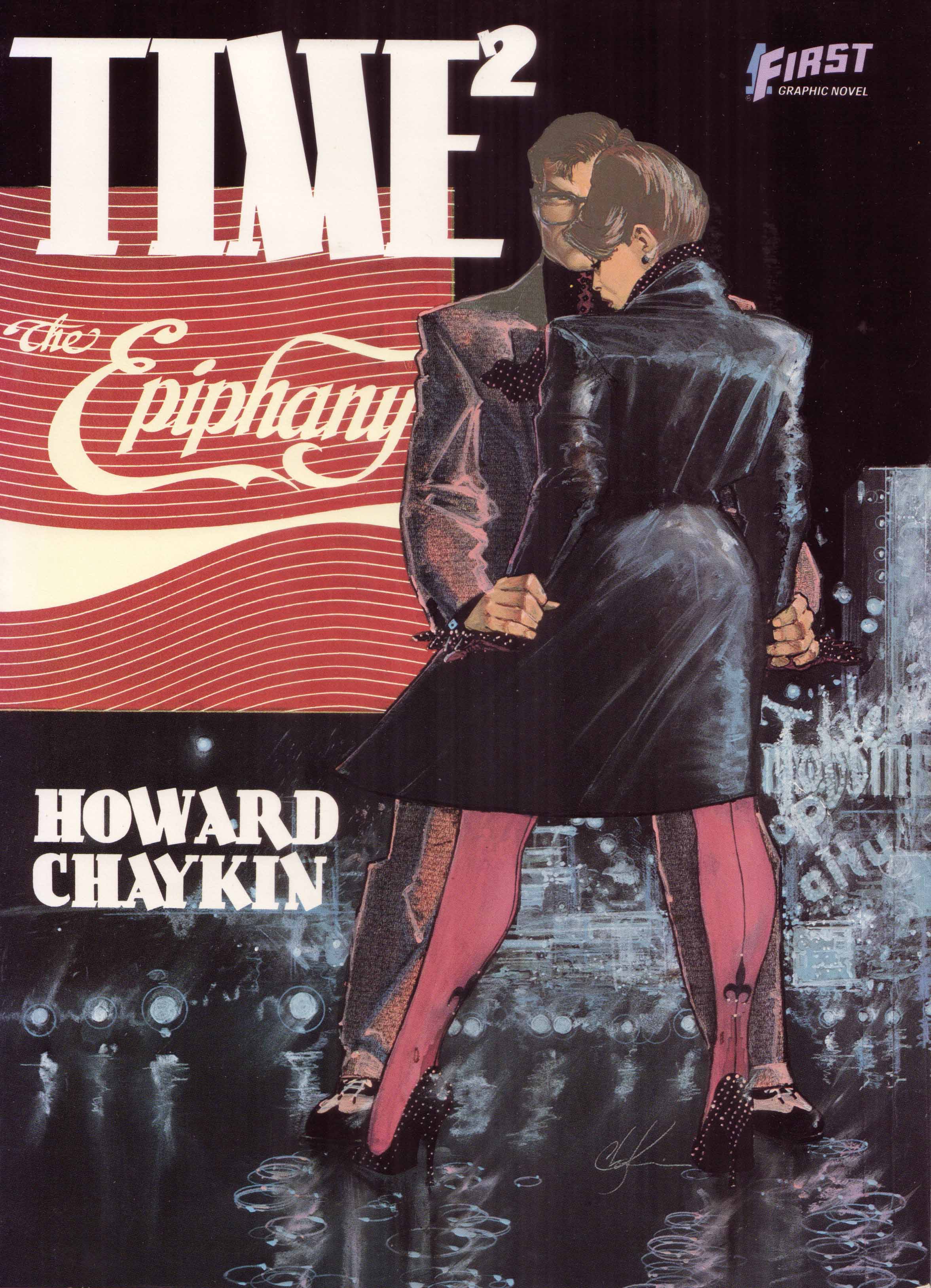
By the early 80's Chaykin had established his style (see samples below) and it hasn't changed much; refined perhaps, also partly altered by the improvement in the technological changes in the use of colour. While his own work for independent comics companies can include the near pornographic Black Kiss (sexy shemale vampires no less), his tendency is to write the roguish hero, as good with a quip/gun/sword/blaster as he is in bed, he's also created comics for both DC and Marvel and drawn/written their characters.

While an intelligent writer and a skilled artist, his prime skill is as a designer. The way he lays out a page that blends text and art is outstanding -check out Google images for numerous examples. Not everything he does works  -the same can be said for Alan Moore- but it's always interesting and he deserves this lavish and currently, on Amazon, modestly priced book.


I could add lots more but enough is enough.

Monday, 21 November 2011

GRAPHIC NOVEL: OSAMU TEZUKA'S THE BOOK OF HUMAN INSECTS (VERTICAL, 2011)

Expanded from an Amazon 4* review
A psychological horror story.

I shudder to think what was going through Osamu Tezuka's mind in the early to mid-70's when this master of the graphic story, known for his compassion and humour, created a series of bleak adult masterpieces which include MW, Ode To Kirihito, Apollo's Song, and Ayako. The Book Of Human Insects preceded all of them and very much sets the tone for what was to come. I have to say that I hate the title, considering it ugly and much preferring the alternative Human Metamorphosis.

The story is fairly simple. An attractive intelligent but completely ruthless young woman, who is completely devoid of empathy, associates with someone of talent in a particular field. She psychologically becomes that person, steals and adapts their work and becomes famous for it. She leaves in her wake a trail of broken lives, suicide, and murder.

It is both fascinating and horrifying at the same time, perhaps even noirish with its femme fatale protagonist. Tezuka populates this graphic novel with a bunch of individual and interesting characters many of whom, even knowing what she is like, are unable to resist her, though one does. Toshiko Tomura, the protagonist herself, is either an enigma or an utterly self-centred psychopath depending upon your own interpretation of what Tezuka is attempting to portray. Even the ending has an ambiguity to it.  It's difficult to discuss actual details without spoiling it so I won't.

The art is standard contemporary-setting Tezuka, containing explicit but never exploitative depictions of nudity, sex, even a brief lesbian encounter, and rape. Unusually, this edition has a dust jacket (see above) but remove it and revealed on the cover are multiple versions of one image -a screaming face.
The images aren't fuzzed out in the book


Tezuka was always fascinated by insects from being a child and clearly the insect theme contains metaphors which, not being well-versed in insect behaviour, have gone over my head. You may well get them.

One thing that is astonishing is that a work of such maturity and skill was published in Japan at the same time as American comics (Undergrounds excepted) were dominated by superhero comics aimed at children and teenagers. It's taken 30-40 years for these mature stories by Tezuka to appear in the West which is just a shame. Better late than never, but it's interesting to speculate what might have happened if western creators had been aware of them then and the impact it could have had. 

Post Script.
I believe that publishers Vertical are going to reprint Tezuka's Adolf series (yes, it both is and isn't what you're thinking) sometime next year. By all accounts this is one of his great works and I'm really looking forward to it. It has been available before  but is now out of print and expensive.

Thursday, 17 November 2011

GRAPHIC NOVEL: OSAMU TEZUKA'S PRINCESS KNIGHT VOL.1 (VERTICAL, 2011)


Osamu Tezuka is one of the greats of graphic storytelling. Not to have read anything by him is akin to not having read anything by Stan Lee & Jack Kirby, Alan Moore, Moebius, Jaime & Gilbert Hernandez, Will Eisner, Frank Miller, etc. Tezuka makes you see the form in a completely new way just as Akira Kurosawa (film), Hayao Miyazaki (animation) and Haruki Murakami (contemporary fiction) do. He is that important.

Tezuka (1928-1989) was an astonishingly prolific writer/artist. His dying words were, apparently, “I beg you, let me work.” He died aged 61, still at the height of his powers, but leaving a vast legacy behind. Although known at the time only as a cult figure to western audiences, he was honoured in Japan where he was accorded the nickname “The God of Manga” for his influence on and contribution to this uniquely Japanese form of graphic storytelling.

His work is enormous in scope ranging from fairly simple children’s adventures to his dark adult-orientated work of the 1970’s, not forgetting his masterpiece, the playfully philosophical multi-volume series Buddha.  But for all the range of work , it is always recognisable as that of the same person. Even in his children’s books there is an underlying compassion, open-mindedness, and empathy for humanity and all our foibles. Even his most famous creation, the exhuberant series of adventures about the child-robot Astro Boy (aka Mighty Atom), is a parable about racism. Yet Tezuka never openly preaches, he lays down his work for the reader to take away what they will.
Note: the book itself is black & white

Which brings me, finally, to Princess Knight, an early work originally published in serial form 1953-56 and then revised and republished 1963-66. Vertical, the publisher who has, and still is, re-issuing many of Tezuka’s finest works state on the blurb that “Princess Knight mixes themes of gender identity and politics with classic shojo-style illustration to create a charming proto-feminist masterpiece…” Wow! Now while this is actually true, it doesn’t make it doesn’t exactly make it sound suitable for children. In fact this is an all-ages fantasy , originally aimed at children (particularly girls) but does possess a certain charm for the older reader.  Vertical, however, are clearly aiming this at an adult audience.

Accidentally given a boy’s heart as well as a girl as a result of the angel Tink (who looks like a young boy) Sapphire has to pretend to be a boy because of the rules of primogeniture in order to stop a nasty person taking the crown. Tink is sent by God to Earth to get the boy’s heart but ends up protecting Sapphire.  I may as well quote again from the blurb otherwise I’d only be paraphrasing it anyway. “Filled with narrow escapes, treacherous, courtiers, dashing pirates, meddlesome witches, magical transformations and cinema-worthy displays of derring-do…” It could almost be the full-length feminist cartoon that Disney never made, though they did rip off Tezuka’s Jungle Emperor when they made The Lion King. Vol.2 is to be published in January and I’ve already ordered it.

But, when you buy your copy, do share it with a child under ten, or, better yet, buy them their own. It’s too good to keep to yourself.

Sunday, 30 October 2011

RECENT AMAZON REVIEWS

Encyclopaedia Britannica Ultimate Edition 2012, DVD-ROM.
The best encyclopaedia in the world. 5* review.

But it doesn't have the best search engine. I'll come back to that.

The one outstanding feature of Britannica is, unlike Wikipaedia (of which, don't misunderstand me, I'm a fan and regular user), you can completely depend on its accuracy (at the time it was written). If Britannica says something is true, you can bet your house, your partner, and children on it (though I don't recommend gambling on principle). In the days before home computers became ubiquitous, Britannica used to be only available in massive multi-volume paper editions costing hundreds and hundreds of pounds and the publishers could afford salesmen as my 13 year old self found out when, after writing off for a brochure, I was woken up shortly before lunch by one knocking on my door (the salesman not the brochure which had arrived days before). Now you can have the entire thing, including multi-media, on one DVD-ROM for about the same amount as a young teenagers's weekly pocket money is amazing, at least to my aging eyes. That it also includes 3 age-related version is even more so. Plus you get online updates albeit for a not so insignificant sum. As a good all-round encyclopaedia Britannica is the best.

Technical detail. When loading it onto your hard disk, you have a choice of installations: with or without the media content. If you opt for the latter you'll need the disc in the drive to access the media content, if the former it doubles the amount of space you need. I chose the latter and it took round about 20 minutes to install. Once installed it worked perfectly.

But even Britannica does have its limitations. It can't contain all the knowledge in the world. I checked out some of my favourites -Blues music, Science Fiction, the Japanese novelist Haruki Murakami- and found the entries to be relatively slight and really little more than a starting point. Admittedly, in the grand scheme of things, these aren't major topics and there is much in depth material on history and the sciences.

Now the search engine isn't very flexible. I typed in soccer and got soca. No hyperlink for the acceptable term 'football'. Also when I first started using it, it seemed to only recognise a personal name by entering the surname first. However, in between the last couple of sentences, I've double checked this and now it is recognising both ways of entering the name. Odd. I've also checked soccer again and this time it has come up with a hyperlink for football. So it seems as if Britannica is learning as I use it. Either that or I've been doing something stupid which, sadly, is also possible. I'd be interested to learn if this has happened to anyone else.

I was going to rate Britannica at four stars but in the light of the preceding paragraph, I've upgraded it. It really is the best encyclopaedia in the world.
  
 
Ho-medics CBS-1000 max shiatsu massaging chair.
A great product. 5* review.
The prime criteria for something like this is: does it work? And the simple answer is: yes, very well.

Once you've got it out of the box, it's relatively easy to set up, though the manual (what there is of it) could have had a little more detail. It isn't obvious at first whether it's switched on or not because the indicator is two very thin rings around the flat switch which go red but once you known what you're looking for, it's fine. The controls -a small hand held device- are easy to use.

I started with the trial programme which I confess wasn't too comfortable. I felt like my back was being pulverised but you can either lower the setting or just endure the pain until you get used to it. Prior to this, I've just used wooden rollers or one of those things which heat up while you rub your muscles with it. This is way way better. I love it.

It also comes with a thin handy storage bag.

In short, this is a well-designed product which fulfills its purpose very well indeed. I can see me using it on a frequent basis. 
 
 One of the greats. 4* review.

There's no question that Berni Wrightson is one of the great horror story illustrators of all time and this is a good selection of his early work. Accompanying stories are numerous frontispieces from the two magazines mostly in colour, though the stories, with one exception, are in black and white.

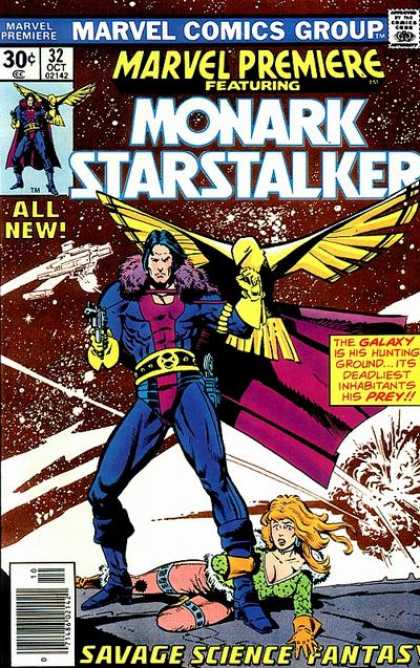
What Amazon's blurb doesn't mention is that not all of the stories are actually drawn by Wrightson. Two of them are him inking Carmine Infantino's pencils to no great effect. Infantino being such a distinct stylist, there's no real apparent trace of Wrightson. Another is him inking Howard Chaykin. Although Chaykin's art is unmistakable, this is more of a collaboration with Wrightson's contribution being clearly visible and making it all the more interesting for it.

Many of the stories have been reprinted before but this is a nice collection to have. 
 
 Worth a try. 
3* review expanded from original Amazon.

Nice to see someone trying something a little different. It's just before D-Day and in an attempt to divert German attention from Normandy, Allied Command have sent two New Zealand commandos (the film is from NZ) to a Channel Island to destroy a gun emplacement but they find something else. Beneath the emplacement is a secret laboratory where one of Hitler's secret supernatural experiments have been taking place. Specifically, they've been trying to raise a demon. Unfortunately for them, they've succeeded.

It's low budget and much of it's set in one room. For most of the running time there are only three characters. Most of the gore is in the shape of already dead and mutilated German soldiers. There are only a couple of notable onscreen kills. Okay, this sounds as if I'm trying to put you off but I'm not. What is so good about this film is the sheer tension the director builds up between the characters that you can't look away from the screen and you really do not have any idea of what happens next. You have two enemies trapped with a devious man-eating demon who becomes the person you love. It is genuinely suspenseful and scary. The World War 2 setting is also an interesting factor which makes this different from the usual run of horror movies.

Saturday, 8 October 2011

BOOK REVIEW: 1001 COMICS YOU MUST READ BEFORE YOU DIE (2011)

5 star Amazon review.
Absolutely essential.

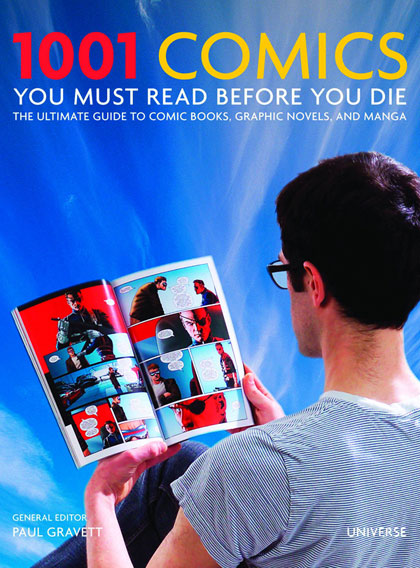
UK Cover

This book arrived in the same package from Amazon with another of similar size that had been ordered separately. There's a reason I mention this this but it will have to wait to the end of the review.

But first let's dispose of that stupid title. Unlike companion volumes in this series -movies, albums, songs- it is completely impossible for anyone to read all the comics listed unless: you have a lot of free time; a large amount of disposable funds; and are versed in numerous foreign languages. Many of the works are out of print and unobtainable except from national libraries; many have never been translated out of their original language. So forget the title, that isn't what this book is really about.

Essentially it's an historical survey of what the various writers and editor believe to be the best or most significant (the two are not necessarily synonymous) comics ever published. I'd argue that it's also polemical in that it's an argument for comics (by which the compiler includes newspaper strips, comics, graphic novels, manga or whatever form a narrative consisting of words and images appears in) as an art form. Comics are a medium just like films and novels.

It's also a reference book which is arranged chronologically. However, before the entries begin, there is an alphabetical list of titles and at the end an alphabetical index of author and illustrator which lists their included works. (You might not be too surprised to learn that Alan Moore has the most entries.) Include useful introduction and a brief guide to contributors and as a reference work it works very well. What you want to know is easily accessed.

It's enormously wide ranging which means people who read only superhero titles will find it quite disappointing, though the superhero genre is represented along with all the other genres from humour to social realism and all stops in between. It's international in scope which is sometimes frustrating as when a work looks extremely interesting but hasn't been translated into English. And it's also enlightening particularly when you come across something you've raved over but didn't believe anyone else had ever heard of. In my case it was The Chimpanzee Complex (UK, Cinebooks, 3 slim volumes), an amazing work of Science Fiction which I'd read earlier this year. Inevitably you won't agree with all the inclusions and will wonder why some of your particular favourites have been left out but that is all part of the fun of books like this.

The amount of text per entry is just enough to cover the basics of what you need to know about each work and it's up to you and me to decide if we want to dig deeper. There is often a cover or full page illustration to convey the flavour of a work but often there isn't. But then space is limited and the book is heavy enough and price is just enough too.

I do have one criticism to make though, admittedly, it is quite minor. A few more works could have been included by excluding multiple entries of a single title by the same creator (Asterix, Corto Maltese, Blake & Mortimer). This doesn't apply to series which have different creators (Batman).

Of course with books like this, because of the publishing lead-in time, they tend to be out date as soon as they appear. The book which arrived in the same package is Craig Thompson's new masterpiece Habibi, a truly remarkable graphic novel like nothing you've ever read and one that certainly ought to have been included but for its almost simultaneous publication date. And then I looked at the last entry...
 US cover

Monday, 19 September 2011

GRAPHIC NOVELS: ECHO -THE COMPLETE EDITION by TERRY MOORE (2011)

An Amazon 4* review.

How do you follow up an acclaimed epic saga of modern relationships -the landmark Strangers In Paradise- which took you 13 years to write and draw? In Terry Moore's case, he spent a mere three years creating a 30-issue series (translated into this 600 page graphic novel) and has done a pretty good job on it.

The basic story is fairly simple. A young woman gets her body covered in a magic metal. The bad guys want it back. Assorted good guys help her. The existence of the world is at stake. But needless to say it is a lot more complicated than that. The characters are extremely well written being very human and very fallible and although there is a core protagonist it is nevertheless an ensemble piece and will satisfy fans of Strangers In Paradise. It's actually set in the same world, though you don't need to have read SiP to appreciate it, more that it's a little nod to SiP fans. It's a very strong character piece as well as being a satisfying work of contemporary science fiction. Moore has done a lot of research for this book and it shows without every getting in the way of telling the story (well, once maybe). I really don't want to say any more as I don't want to spoil the many pleasures Echo has in store.

Artistically, Moore isn't one of the greatest stylists, though he's a more than adequate artist. His backgrounds have just enough detail to create a scene. But then his real interest is in character and reactions and he is excellent at drawing people, faces in particular, and at conveying body language.

Not quite a five star book but highly recommended all the same.

Sunday, 11 September 2011

GRAPHIC NOVELS: XENOZOIC by MARK SCHULTZ (2011)

This review first appeared on Amazon UK.

If the names Burne Hogarth, Hal Foster, Frank Frazetta, and Al Williamson mean anything to you then order this book now. But there are other reasons.

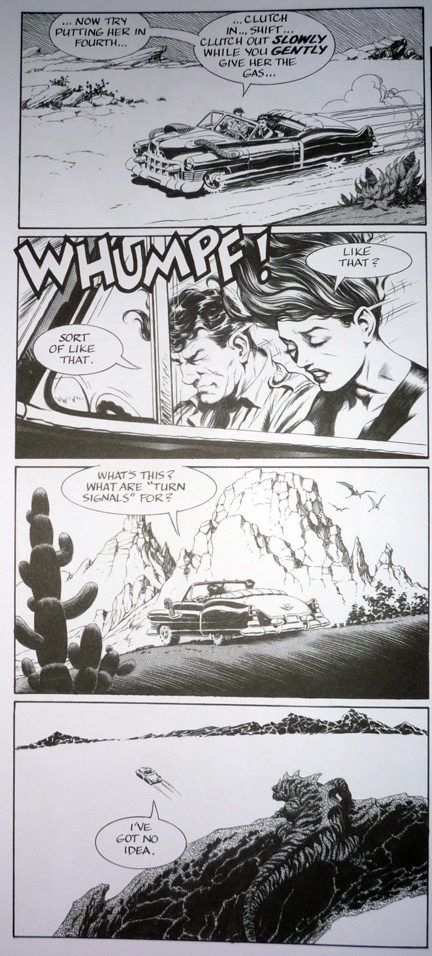
Centuries after an environmental collapse, humanity has emerged from underground shelters to find a very changed world full of creatures from another time. Now tribal shamans try to maintain a balance between the needs of their people and the environment, a balance which many find restrictive. The setting of Xenozoic is the City in the Sea and its shaman is two-fisted mechanic-environmentalist Jack Tenrec who does things his way whether the ruling council like it or not. The story begins with the arrival of Hannah Dundee, ambassador of the Wassoon tribe of the Tidal Flats. Xenozoic is the story of Jack and Hannah.

The world Schultz creates is more complicated in every way than it first appears and writer/artist Schultz is in no hurry to give away its secrets. Indeed, by the end the book have the impression he's barely scratched the surface. Initially episodic, it develops into an ongoing and more assured narrative. Reminiscent of 1920's and 30's pulp fiction but with a modern sensibility, it's packed with action and skulduggery, monsters and beautiful women, and more.

And the artwork! In the tradition of the artists cited above but with a hint of Wally Wood and Berni Wrightson, the detailed black and white art is just gorgeous.

Great characters, a fascinating setting, good stories, wonderful art. Graphic stories just don't get much better than this.