Showing posts with label book reviews. Show all posts

Saturday, 13 April 2013

BOOK REVIEW: ROCK CHRONICLES (2012)


An Amazon 2* review.

Neither nowt nor summat.

Or, in English, it is neither one thing nor another.

Basically, this book tries to do too much and fails as a result. It attempts to present an overview of each of the world's best rock acts. To do that it spreads its net wide to encompass: alternative, blues rock, classic rock, country rock, experimental, glam (glam is rock?), grunge, hard rock, metal, folk rock, new wave, pop rock, progressive, psychedia, punk, rocknroll, and soft rock. It also, worthily, includes a number of bands from non-English speaking countries many of which most readers will never have heard of. By trying to cover all the bases it never satisfactorily covers any and numerous worthy artistes are omitted. Two examples: Stephen Stills isn't in (but Neil Young's there as is Buffalo Springfield), Echo & the Bunnymen aren't but The Teardrop Explodes/Julian Cope is. I'm sure any reader will find their own examples.

The book also lists the years active which in some cases is highly misleading. Example: Buffalo Springfield is listed as active 1966-2011 which is just ludicrous. They were only active for a couple of years and were really a springboard for Stills and Young. A couple of late reunion gigs don't, or shouldn't, count. Also 'active' is not a synonym for 'creatively viable'. Many artists are still trundling on doing live gigs where they play their greatest hits from many years ago. Example: As a creative force Chuck Berry (a truly great artist)was played out by the end of the 60s.

The overviews themselves aren't bad but you can read better on the website All-Music Guide.

It's a book for people to borrow from libraries rather than buy for themselves because it just isn't worth the money. 


Sunday, 25 November 2012

MUSIC, BOOKS, DVD: RECENT AMAZON REVIEWS

Been a while since the last post. Several reasons: I've been busy; I haven't been well; I'm splitting up from my wife; I'm in the process of buying a house; I couldn't get in the mood. I'm forcing myself to do this one even though it's easy as it's mostly already written. I did have plans for: an overview of the two DVDs and the official book of the London 2012 Olympics; a run through of books I've read, am reading, and am waiting to read; ditto for DVDs.


Why do I keep buying Grateful Dead albums?

 I'm certainly not a Deadhead; a Deadhead being the accepted name for die-hard fans of the band and who, if they can afford, buy every single (an inappropriate word given that most of their releases are multi-volume live sets) thing issued. I most certainly do not. I doubt if I own more than a quarter of their live output. True, I also have the two massive box sets of their official major label releases (with lots of extra tracks) but that doesn't make me a Deadhead. I most certainly have not nor have I any intention of buying any of the massive live sets (like the complete Europe 72 concerts or the one from which this collection is culled). But equally I can't deny that I'm a big fan and they are my favourite band.

I'd like to propose another class of GD fan called: (and ripping of shamelessly from Sam Raimi's The Evil Dead -I'm also a horror movie buff) The Deadite. The Deadite is an enthusiastic GD fan but not obsessively so. They're someone like, well, me who had to have this compilation but not the massive set from which it's compiled.

And, boy, am I glad I did. Clocking it at around 79 minutes on each of the two discs, you couldn't possibly get more for your money, and a reasonable price it is too. Later period Dead isn't as fashionable as their 70's heydays but this set goes some way to correcting the image of later period as somehow inferior. Let me tell, om these discs, the band are on fire. They are as tight and as sharp as I've ever heard them. Maybe it's the production or better quality drugs, I don't know. What I do know is that, because it's a well chosen compilation, there isn't a dud track here. You could even use it as a introduction to someone who's never heard the Dead before.

No question, this is one of their best live releases ever. 

 First off, I write this as a long time reader of SF and Fantasy novels, and of super-hero comics/graphic novels/whatever, and comics in general and review all of them regularly, often here on Amazon. Turning my head from the screen I can look at my bookshelves filled with dozens of super-hero graphic novels. Okay, credentials established, herewith the point of this review. Super-heroes don't work as prose fiction. Qualification: I'm talking about the costumed super-heroes who live in a common universe of the like of those established by DC and Marvel. You can have what are effectively non-costumed super-heroes disguised as, say magic users and it will work -see my recent review of Hard Magic- but mainstream costumed super-heroics don't.

They can, just about and albeit watered down, work on TV (Smallville and the recent Arrow), and work very well on film but even there it helps a lot if the director is Joss Whedon. But where they work perfectly is the place that they came from -comics. In comics the stylised dynamic art creates a convincing hyper-reality that transcends the essential silliness of the concept. Comics were made for super-heroes and it's their natural home.

But prose without pictures isn't. I've read a number of novels which attempt to transcribe costumed super-heroes from their home into another format and, with one glorious exception, they don't work. And Seven Wonders isn't the exception.

I can't go into too much detail because I'm assuming a few of you will be buying this book so I'll have to comment in more general terms as I don't want to write any form of spoilers. In the Californian city of San Ventura lives the world's last super-villain -The Cowl- and his nemeses, the superhero team known as Seven Wonders -probably because the wonder is why they can never catch him. The our hero suddenly discovers he's developing super-powers and battles the Cowl who attempts to rob a bank where he's cuing up for cash and defeats him. What follows is a multi-viewpoint story in which, if you can't guess most of the surprises, twists and turns, you haven't been reading comics (or any fiction) lately.

And what also follows is why the book doesn't work. The author hasn't attempted to create a prose form which describes super-hero battles, and other super-hero tropes, that actually works. "Avengers assemble!" works fine as a battle cry in a comic in big dynamic lettering and shouted out by Captain America but is just silly in text- "Seven Wonders, unite!" when spoken by a character we know little about. The descriptions of super-hero fights are ploddingly mundane without any accompanying images. But to be honest, the rest of the prose is competent at best and the real story, when we finally get to it, just isn't very interesting.

In short:it just doesn't work.

To be fair there are three pages of ringing endorsements from numerous people whose names I recognise and all of them are in the comics industry, most of them being comics writers, so I suppose they would say that, wouldn't they?

And the one glorious exception to super-heroes in prose -it's the Wild Cards series, a shared world created by George R R Martin (Games of Thrones) a few years ago with the help of many other talented writers. Try and get the original series but avoid a more recent attempt to revive it. 

(NB. Since writing the last half of the final sentence I've discovered there have been three more Wild Cards titles since the unnamed two which didn't impress me and I've ordered all three.)


 Promising start to a tough alternate magical mystery history series.

Despite the cover, it isn't hard-boiled fantasy but good secret society vs bad secret society. It's also more of an ensemble character piece with frequent shifts of viewpoint between the various characters. Despite the emphasis being on magic -it exists and an individual can (supposedly) only have one magical power- it reads to me more like secret societies of superheroes.

Whatever. Basically history has been changed by the existence of people with magical/super powers and public reaction has varied. But that's just the background. The story is the recruitment of (really, really, really) tough guy Jake Sullivan to the cause of the good guys magical secret society and their hidden war with the bad guys magical secret society. It's about 20% too long but it still kept me reading and I'll be back for the sequel. 

Pleasantly surprised.

While not without its flaws, this is actually quite a good reworking of the old Edgar Rice Burroughs novel of A Princess Of Mars, providing a semi-rational explanation of how Carter gets to Mars in the first place -which is more than old ERB did.

On the acting side is solid work from hero Taylor Kitsch who is outshone by a feisty Lynn Collins as Dejah Thoris, with solid support from the supporting cast including Dominic West, Ciaran Hinds, and Mark Strong. The special effects are convincing, especially the four-armed Tharks led by Tars Tarkas (Willem Dafoe). The airships are good to look at and it usually moves along at a fair pace.

I can't understand the downpour of heavy criticism the film engendered as it's a solid and entertaining genre piece. Sadly this means there won't be any sequels or other movies set in exotic alien landscapes with two-fisted lantern-jawed blaster-wielding heroes, beautiful mysterious heroines and ancient and deadly secrets from the heady days of Pulp SF and written (at its best) by Leigh Brackett. Alas.

A likeable subtitled Spanish horror-comedy.

This is a low budget pleasant time-passer in which the humour comes out of the characters rather than being forced, which is always a good thing. To save money, rather than film the prologue which sets the scene, we get an illustrated one which resembles racy comic book art and is quite effective.

Once that's over, the film itself is set in and around an isolated and cursed Spanish village. Removing the curse (a wolfman) depends on our hero getting eaten on a specific day by the wolfman and if he isn't a worse curse descends on the village. Needless to say, this happens and the English title sort of gives away any surprise as to its nature. The gore is moderate and often undercut by humour. The monster is quite good and accurately depicted on the 3-D cover and a very effective 3-D cover at that.

Approach it with moderate expectations and a couple of beers and you'll have a reasonably good time. 

 I have mixed feelings about this book as there is a lot to like about it but I also have one major gripe.

The good stuff includes an interesting premise which sets this apart from other Urban Fantasy (of which I've been reading a lot lately) as three mismatched coppers (police to our overseas friends) and a researcher are forced together to use police procedures to investigate a crime involving the supernatural. It's more complicated than that but I do try to avoid spoilers. It also involves a major football club (West Ham) and Anne Boleyn, and a really vile villain who commits certain acts which are truly shocking and horrifying to even the most hardened reader. It builds well to a climax and sets the scene for a sequel.

Cornell is a competent writer of growing experience but one who lacks a talent able to deliver the groin-gripping prose of, say, the current maestra Kate Griffin.

My gripe is that the characters are never vivid or distinctive enough, particularly in the beginning and it took me a while to get any sort of handle on them and I never really did with one. Eventually the sheer power of the story does overcome this and it kept me reading right to the end but it's still a misjudgment on my part. Or maybe it's just me.

Worth reading at a rating of three and half stars for fans of the genre but be prepared to persevere at first. 

Post Script.

There's another couple of CDs I'd like to have reviewed but I haven't listened to them enough to do them justice (though I know I like them a lot). They are: Emeli Sande's Our Version of Events (special edition) and Neil Young's Psychedelic Pill and you can't get much more diverse than that. The Young ( with Crazy Horse) CD begins with a 27 minute long track which is longer than some famous artists entire albums.

Monday, 29 October 2012

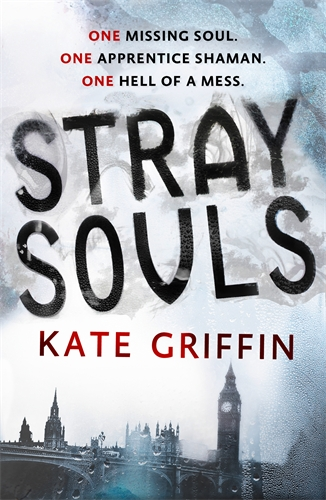
BOOK REVIEW: STRAY SOULS by KATE GRIFFIN


As the saying goes, you can have it fast or you can have it good. With Kate Griffin you get it fast and you get it good as she effortlessly knocks out a couple of novels a year.

In this book, set in the same London as the Night Mayor (who makes several appearances), Griffin has stuck has struck gold with a great idea. Sharon Li who, for some reason, is afflicted with magical problems, sets up a support group called Magicals Anonymous for people (and, as she discovers, people who aren't people) with problems caused by magic. To her surprise, it's quite successful. Also to her surprise she learns that she's a shaman and the only one (with a little help from her new friends) who can deal with a magical danger that even the Night Mayor can't handle.

And that's pretty much all I'm going to tell you about the plot as I wouldn't want to spoil any of the many pleasures and surprises this book contains. I will tell you that this book contains Griffin's considerable and idiosyncratic gift for description, particularly of London. Being cynical I considered that a. she made it all up, or b. spent hours on Google at street level, or c. walked the streets of London more than anyone who wasn't homeless. After checking her blog it turns out that it's c. 

But back to the point, I just want to make it clear that Griffin is a spectacularly good writer. Not a great one yet but give her five minutes and she will be. She sold her first novel at age 14, under her real name of Catherine Webb she was nominated for the Carnegie Medal in two successive years aged 19 and 20. Now she's reached the ripe old age of 26, I shudder to think how good she'll be in about another ten years. Ten years after that she'll probably be World President, if she can be bothered.

I would just like to point out that the page length of this book is deceptive and that you'll read it fair more quickly than you expected (even allowing for the fact that you'll find it difficult to put down). There are a total of 111 chapters in 438 pages giving an average chapter length of fractionally under 4 pages so there is lots of white space. One chapter just consists of 7 words (8 including the title) and all the same word (excluding the title) which I would quote except for that it might be considered unfair usage to print an entire chapter even for review purposes.

The book would also make the basis for a good TV series. A two-parter, based on the book, to introduce the characters coming together, then several more focusing on one or two of the group. That's on British TV. If the Americans buy it it'll probably be called Magicals Anonymous: Missions Very Impossible.

Anyway, get in on the ground floor so you can boast you were reading Kate Griffin before she took over the world. Plus you'll also get to read a terrific slice of British Urban Fantasy.


Friday, 27 July 2012

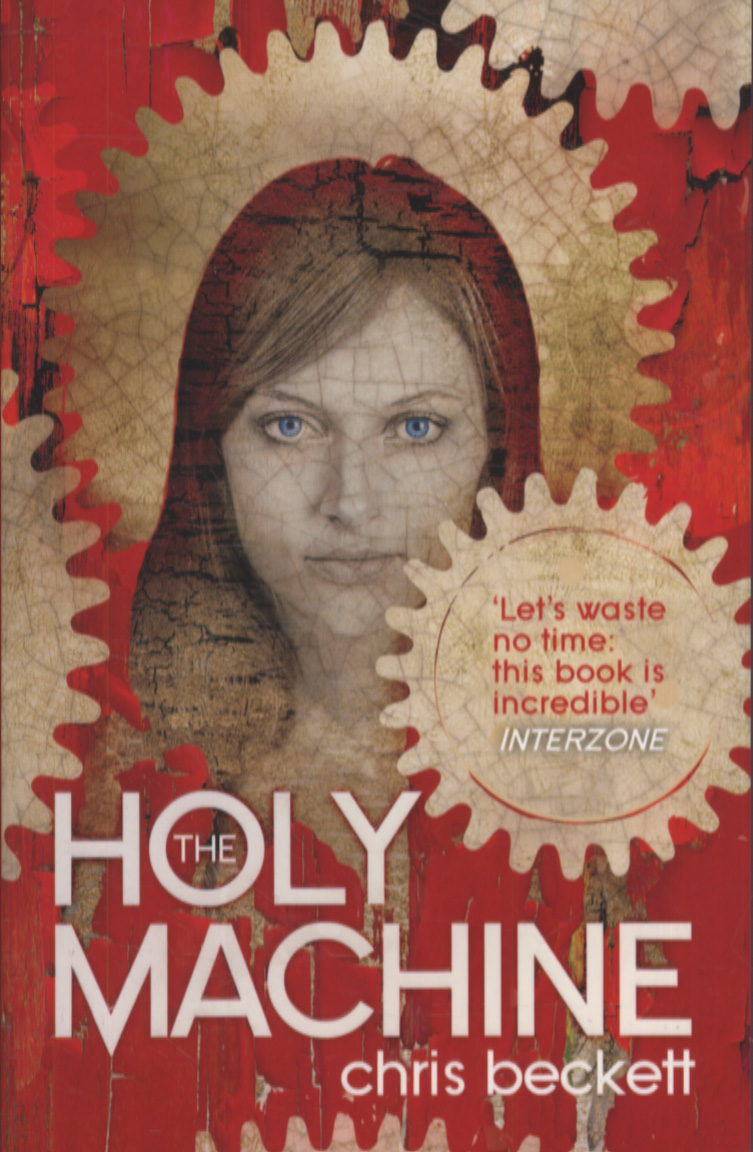
BOOK REVIEW: THE HOLY MACHINE by CHRIS BECKETT (2004)

Science Fiction used to be pretty much the centre of my life from about the age of 20, when I first found out how to get American imported paperbacks, up to about 35. Mind you, I can't ever remember not loving SF even before that, ever since I realised what it was. I just could not get enough of the stuff and built up a pretty enormous collection. I was also very active in SF fandom, publishing my own fanzines and writing for others. In my thirties I became obsessed with writing the stuff, well, and just writing novels per se. 

But eventually I moved on with crime becoming my favourite genre fiction. I never completely lost my ties with fandom, though any connection with it these days is quite tenuous and thread-thin. Writing fiction became an occasional dabble in which I currently seem to have no interest at all, with blogging fulfilling my need to communicate and write and the main focus of my attention can be found in my other blog.

But I could never give up on SF even though I rarely read it any more and am often disappointed with what I do read. Still I keep trying the odd book from time to time like the one I'm reviewing here. This came to my attention as one recommended by Amazon following a spate of buying some Urban Fantasy books (which I keep intending to review en bloc). Don't know what it's got to with that genre but it nevertheless intrigued me and I finished reading it a couple of hours ago and, yes, the comment from an Interzone reviewer on the cover about is quite correct.

When I first started reading it I wasn't sure at all because the background scenario has to be my worst nightmare. In a reaction to secularism and science, there is a worldwide mass uprising of fundamentalism from all religions and sects (though Judaism and Buddhism aren't mentioned) sending the world back into a modern version of the Dark Ages. To counter this, Illyria, a high-tech country, is created in a region of the Adriatic which is where George our protagonist lives.

George isn't the usual SF hero, being diffident, despite being in his 20's he's never been kissed, and has a mother who prefers to spend her time in cyberspace. But, just as I briefly outlined about my life, things change. He falls in love with a human-like sex robot in whom he senses an emerging awareness not related to her programming. When the increasingly fascist government decides to wipe the minds of robots every six months, George goes on the run with her through bordering religious states which, incidentally, hate robots even more than they hate unbelievers.

This is an absolutely fascinating novel which looks at the nature of consciousness and simultaneously both the need for a belief in religion, in something transcendent (which might also be consciousness) and how (to many cheers from me) bloody fucking imbecilic and irrational religions are. It's thoughtful and clearly written which engages the reader, despite George being very much an outsider, though his life and his perceptions of the world undergo a profound change during the course of the novel.

In short, I absolutely loved this book which reminded me why I loved SF -its alternative pluralistic views of society (as well as unfettered imagination)- in the first place. As far as I can tell, it didn't win any awards which is a shame. Anyway, I've just ordered Beckett's other two novels and added his short story collection to my wish list.

This is the book that you give to people who think they don't like SF. It has a heart and a brain.

Wednesday, 11 July 2012

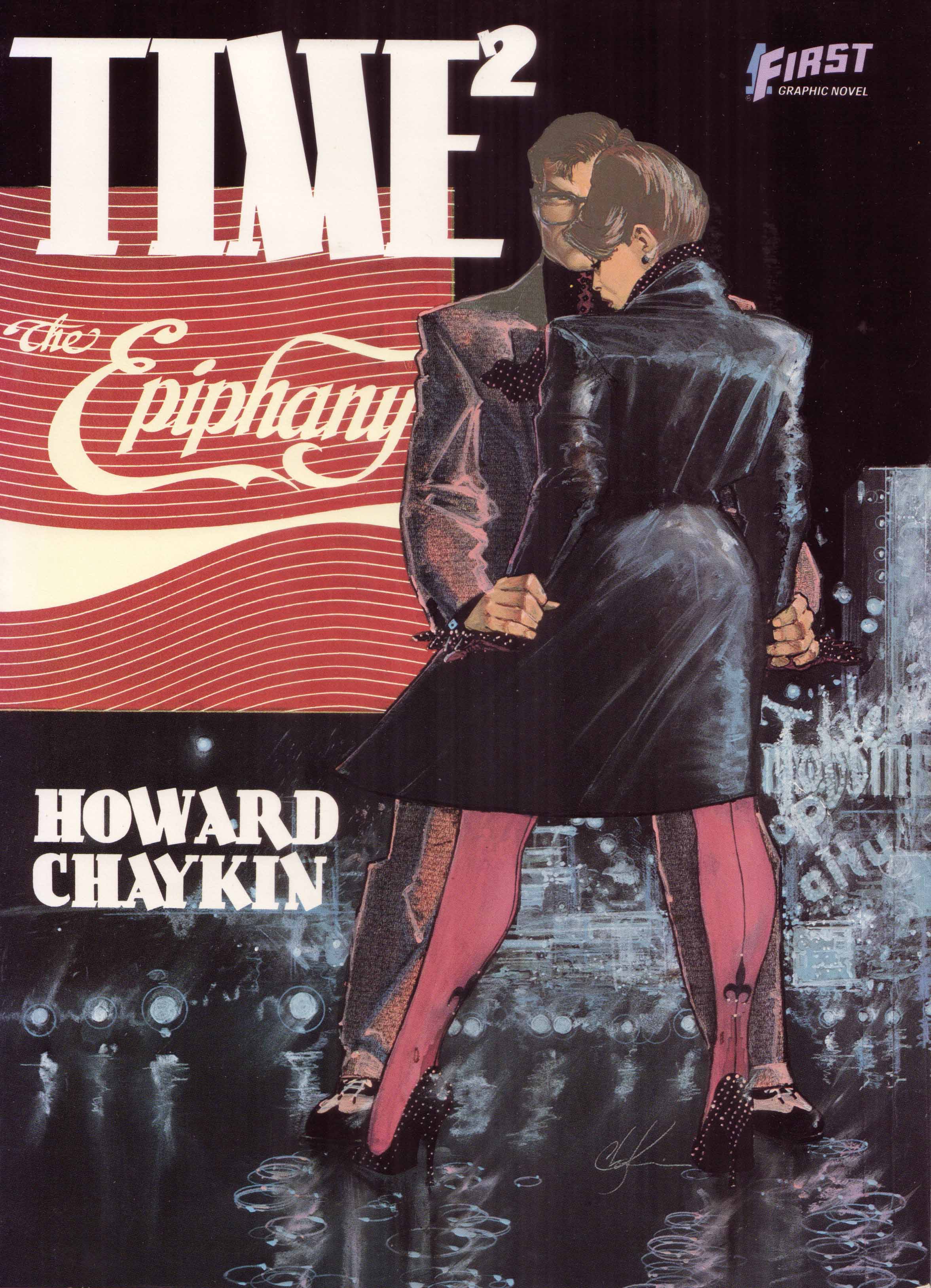
BOOK REVIEW: THE ART OF HOWARD CHAYKIN by BOB GREENBERGER (2012)

This is one of those reviews where I'm not sure where to begin. I can't start by saying that Chaykin is one of the greatest comics artists ever because he isn't -though he's pretty damn good. What he did do, however, is to write and draw American Flagg which is the greatest science fiction comic ever -I've reviewed the two-volume compilation elsewhere in this blog. He did this back in the early 80's before Alan Moore (who wrote a backup strip for it) became  ALAN (PRAISE HIS NAME) MOORE! and before Frank Miller released The Dark Knight Returns which cough borrowed cough the narrative/satirical info-dump technique from AF and then got widely praised for this 'innovation'. Perhaps not surprisingly, Chaykin doesn't have much time for Miller.

I could write a lot about American Flagg but I've already done that so I'll just say that if Chaykin had done nothing else he'd have earned a distinct place in the history of comics. Fortunately he did and this book explores all of it.

As an account of the work of a comic writer and artist, this is an excellent book. It's physically large, on glossy paper, with a vast amount of illustrations and an equally substantial amount of text. Structured chronologically, most of the written content derives from long conversations with Chaykin conducted over the course of a year. (This text is interspersed with comments from various peers which range from insightful and informative to 'my buddy Howie, wisecrack, wisecrack)'. This is followed by a checklist of everything Chaykin has had published, split into categories including comic books, strips, collected editions, etc. After this comes an eclectic forty page gallery of artwork. Anyone wanting to create their own The Art Of My Favourite Artist wouldn't go wrong using this as a template.

Chaykin started back in the early 70's as an assistant to people like Gil Kane. It's a comic business tradition of artists using assistants to do background work on panels and learn the trade that way and Chaykin continued this tradition. It's a form of payback and Chaykin always pays his debts. The impression gleaned from the book is that he's the sort of person that if you like you like a lot and if you don't you cross the street to avoid but that's probably your loss. While admitting he might be an acquired taste, his peers are unstinting in their praise for his professionalism, the honesty and insight of his criticism, and how he goes out of his way to be helpful. When it comes to his work, he's meticulous. If he agrees to write and draw a 28 page comic every month then that's the editor will receive and it will be the best he can do. 

By the early 80's Chaykin had established his style (see samples below) and it hasn't changed much; refined perhaps, also partly altered by the improvement in the technological changes in the use of colour. While his own work for independent comics companies can include the near pornographic Black Kiss (sexy shemale vampires no less), his tendency is to write the roguish hero, as good with a quip/gun/sword/blaster as he is in bed, he's also created comics for both DC and Marvel and drawn/written their characters.

While an intelligent writer and a skilled artist, his prime skill is as a designer. The way he lays out a page that blends text and art is outstanding -check out Google images for numerous examples. Not everything he does works  -the same can be said for Alan Moore- but it's always interesting and he deserves this lavish and currently, on Amazon, modestly priced book.


I could add lots more but enough is enough.

Sunday, 24 June 2012

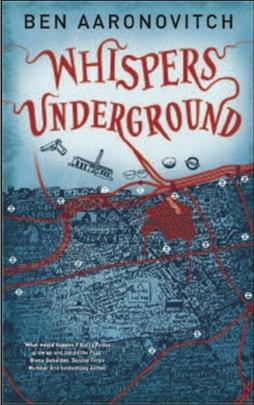
AMAZON BOOK REVIEWS: THE LONG EARTH by TERRY PRATCHETT/ STEVEN BAXTER and WHISPERS UNDERGROUND by BEN AARONOVITCH


4* Interesting idea

The idea of parallel earths is hardly original as it goes back at least ninety years in the history of Science Fiction to a story by Murray Leinster. Baxter and Pratchett do something a little different with it by firstly creating a potato-powered device which makes it easy to step into another world and secondly by having humanity non-existent in all of them but our own. Needless to say the two authors work well together and create a book which is different from either of their individual work but just as good. So don't go in expecting a Terry Pratchett story or you'll be disappointed.

It's highly readable and I could (have not other things got in the way) have read it in one session. There is so much potential in this scenario that it's inevitable the authors will end up surprising the reader as they take the story in unexpected directions. After finishing it I kept wanting to ask the authors about several things which occurred to me.

There's the (in)convenience that iron won't cross into another world with severe limiting effect (never mind that you can't take more than you can carry). This makes industrialisation exploitation very difficult. This is never explained but it suits the purposes of their story. Do they have a logical reason behind it?

The result of all this is that akin to a pioneering frontier type lifestyle similar to that of the colonisation of America only without the Native Americans. Some way into the story we learn that a fifth of the world's population have stepped over. Really? A fifth (or more -see a following point) of affluent societies have forgone their comfortable lifestyle to become pioneers. Sorry, but I for one like the creature comforts of a high tech society.

Also, while I know it's set a little way in the future and the device is relatively cheap. It would be difficult for those who would really need it to get their hands on it. I'm thinking of the majority of Africans who suffer from famine and oppression and lack of education. How could they get their hands on the electronics needed? Come to that, how could they get their hands on a potato?

None of this affects the story, it's just stuff that I thought of as a result of the story and doubtless there are numerous more implications or omissions to be found. This is actually another reason why you should buy this book -it makes you think. 


4* Is this man prolific or what?
 
This is the third book in the series in little over a year and shows no decline in quality. Instead, more secrets of London are revealed as seen through the eyes of Detective Constable Peter Grant (apprentice magician) our engaging narrator. This time, as the title suggests, the secrets are underground.

I started reading this around lunchtime and finished by early evening which tells you something about its readability. If you haven't read any of this series before, start with the first. But don't worry, it won't be long before you're reading this one. You won't be able to help yourself. Great fun series.

All right, Aaronovitch, when's the fourth one coming out you lazy sod?

Friday, 18 May 2012

BOOKS: JOSS WHEDON THE COMPLETE COMPANION edited by MARY ALICE MONEY for POPMATTERS.COM


Slightly revised from an Amazon 4* review and entitled:
Welcome to Whedon's World

And it is about the world(s) created by Joss Whedon and not about JW himself (I'll get back to that point later). Fortuitously timed to cash in... sorry, coincide with the release of The Avengers movie and resultant raising of his profile, this book is a collection of essays about his TV shows, films, and comics. Given that the book was submitted to the publishers in November 2011, well before the release of The Avengers and The Cabin In The Woods (which are both terrific) don't expect anything of insight into them here.

There is, however, masses of stuff about his other, er, stuff with the biggest chunk being about, no surprise here, Buffy The Vampire Slayer. It's a mix of overview, interviews, and rather academic essays. As an example of the latter, one writer interprets Whedon's excellent run on The Astonishing X-Men in the light of the writings of modern historian Francis Fukuyama and if that sounds appealing to you then you're really going to love this book. If there is a preponderance of academic style essays in this collection, it should also be said that they're mostly reasonably accessible to the general reader.

If there's a tendency to find subtexts under every (metaphorical) rock in Whedon's work, at least some of the writers are aware of this tendency to see things which aren't there. As mentioned in an introduction, one writer (not represented here) wrote that the killing of the character Tara in Buffy was deliberately anti-feminist while the truth is that the actress playing Tara wanted to leave so Whedon used that to enhance the drama.

Basically anyone who's a fan of Whedon's oeuvre (i.e. in non-pretentious language: his work) will find much of interest in this very comprehensive book which goes some way to explaining why Whedon has become such a cult figure. In essence: we identify with his concerns and characters to such a degree that we feel that he is us and we are him. Or, as Nelson Mandela put it in his one acting role: "I am Joss Whedon." (Actually he said, "I am Malcolm X," but don't tell.)

What, however, this book won't tell you is much about Whedon the man and Whedon the life. I'm not knocking it for that; it is what it is. But what we fans would very much like is a, preferably, authorised biography of the great man which goes behind the scenes of his work and how the tv series and films were put together, his problems in doing so, his relationships with the production team, cast, crew, groupies (just joking), etc. With his profile so high, now is surely the time. Meanwhile we've got this to keep us going. 

And just to add colour, here are are some of his greatest hits.

Sunday, 29 April 2012

BOOK REVIEW: STONEMOUTH by IAIN BANKS (2012)


Despite being a life-long fan of science fiction (albeit less so in the last few years), I've never been able to get away with the works of Iain M. Banks. Contemporary novelist Iain Banks, however, is another matter. That Banks has written some of my favourite mainstream novels of the last 25 years -Espedair Street, The Crow Road, and The Steep Approach To Garbadale. He's written several others which I've enjoyed but these are my favourites. These are his specifically Scottish novels and share a similar approach which I like a great deal and Stonemouth is his latest in this vein. 

They tend to deal with the theme of estrangement and reconciliation. Each focuses on an individual and is written in the first person and involve the narrator returning to his roots and how he reacts to what he finds there. The full picture is only gradually revealed through present encounters and through flashbacks. Stonemouth fits this pattern to a T.

Stewart, a young man in his mid-twenties, returns to Stonemouth, a small coastal town run moderately benignly by two gangs, for the funeral of one of the gang-lords. Five years earlier he committed an indiscretion which resulted in him fleeing for his life. He returns with the promise of safe conduct so long as he leaves immediately after the funeral.

Banks is incapable of writing a dull sentence and the opening couple of pages evocatively describe being alone in the middle of a suspension bridge shrouded in mist above an estuary where the narrator shortly has an encounter with a local hard man. And after that you just don't want to stop reading as Banks gradually unfolds the story and reveals the mysteries surrounding Stewart and his past.

This is the weakest of the Scottish quartet -certainly it lacks the density of The Crow Road- but that doesn't mean it's a poor book by any means; it just isn't Banks at his very best. The protagonist's sin, when revealed, proves to be little more than a MacGuffin, an is-that-all? moment. 

Nevertheless, I read it in about a day and enjoyed it a lot. It certainly won't disappoint fans of Banks' writing. Well, maybe just a little.

Monday, 16 April 2012

BOOKS: THE HUNGER GAMES TRILOGY by SUZANNE COLLINS (2008-10)


I picked up the first one for less than half price and on a whim at Asda on a Monday. By Wednesday I'd finished it and went back for the other two and I read all three in almost exactly a week.

I suppose there may be some of you who don't know what the books are about -which these days is like not knowing who Harry Potter is- so I'll do a brief summary.

An unknown number of centuries in the future, North America is known as Panem. The 12 Districts of Panem are ruled by the Capitol. 75 years before the start of the first book, the Districts rebelled against the Capitol. They lost, the 13th District was obliterated, and to celebrate their defeat, The Hunger Games were started. Each of the District send one male and one female, aged between 12-18 and chosen by lottery, to the games where they until only one is left alive. The Districts are ranked, roughly on descending order of affluence, though none approach anywhere near the wealth of the Capitol. District 12, the home of Katniss Everdene our narrator, is at subsistence level and starvation is common. Technology ranges, very approximately, from that of the mid-1800s (District 12) to a century or more in advance of our own (the Capitol). Katniss wins the game and inadvertently becomes a symbol of rebellion against the Capitol. The second and third books explore in detail what happens as a result.

Excuse me while I pat myself on the back because I think that's a pretty good synopsis/introduction that doesn't manage to spoil anything. And, let's face it, you know Katniss is going to win because there are two more books to go so that isn't a spoiler. What follows are my impressions of the series.

First of all, I obviously think it's pretty good and certainly better than the Twilight series -I have read the first of them and that was enough. It's a thoughtful trilogy which actually contains ideas and poses questions about relationships, about responsibility, and about society. This is not your average teenage fluff.It's also one of those piece where your own views dictate what you see in it. Is it an allegory about the America Revolution -13 states/districts rebelling against Britain/the Capitol? Or maybe the number is a coincidence. I seem to see certain right-wing libertarian underpinnings but I could be completely wrong about that. It's entirely possible a right-wing libertarian might find underpinnings of libertarian socialism. This ambiguity is part of what makes the books interesting.

The real success of the books depend, however, on convincing and interesting the author makes the narrator (16 at the beginning of the story). In some ways, Katniss is a curious choice as she is very much a passive character in many ways, someone who reacts rather than acts, her choices depending on the actions of others. She is kind and caring but also diffident. She has a long standing friendship with Gale who taught her how to hunt but he isn't her boyfriend. Peeta, the other person from District 12 to enter the Games with her, declares his love for her on national television and she has to play along with it for several reasons, but her feelings for him, which constantly shift, are mixed. In a way, the choices she makes are often forced on her by others and by circumstance which may be the author making the point that this is not necessarily a good thing. Further, she isn't the most perceptive narrator. Our views of other characters and the interpretation of events are determined by Katniss's perceptions and these are not always accurate; which, of course, actually makes it more interesting. It also poses a question to the reader: how much are you like her?

The more I think about it, however, the more I'm decided that is what the trilogy is about: making choices. It's about finding yourself and growing up. As I said above, what you bring to it just might dictate what you find. Whatever, there is a depth here that you don't usually find in many bestsellers. While I find it flawed in some ways it is still an impressive achievement and deserves its reputation.

Now I'm going to try and catch the movie while it's still showing.

(Slightly revised, 17/04/12)

Tuesday, 31 January 2012

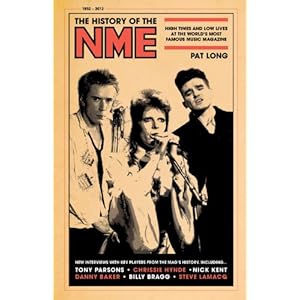
BOOKS: THE HISTORY OF THE NME by PAT LONG (Portico, 2012)

Expanded from an Amazon 5 star review entitled: The book that needed to be written.

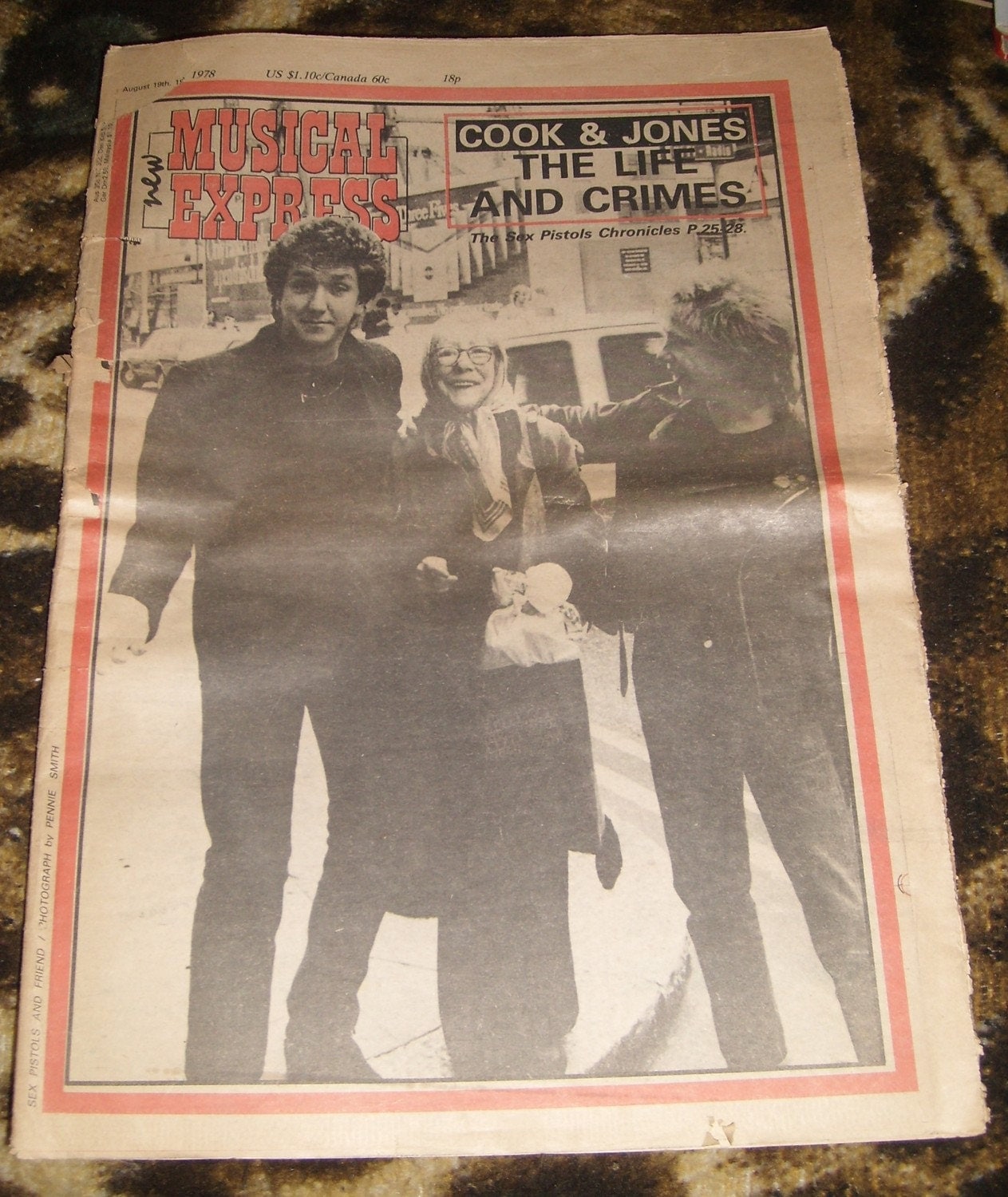
The NME was a phenomenon. For the last 50 years anyone seriously interested in modern music will have read it at some time in their lives. While its importance has waxed and waned, it was nevertheless a serious British cultural icon. For me that was roughly from 1962-1982 (maybe a bit later) which covered my teenage years when just about everyone in my class read it and talked about what it contained and argued about the msuic, up the through (for me anyway) its golden age of superstar writers like Charles Shaar Murray, Julie Burchill, Nick Kent, Tony Parsons and so on. Murray remains to this day one of the best writers about music and its trappings.
Burchill & Parsons
 Writer Pat Long covers the NME's long internal story with a fair amount of detail -the feuding, the drugs, the highs and lows and the newspaper's coverage of the ever changing face of music. He hits the nail on the head with the appearance of Q magazine signalling a sea-change in readers' attitudes as I was one of those who wanted something more the NME could offer and found it in a glossy monthly magazine.

The NME was an important part of my cultural life and I found this account fascinating, consuming it in little over a day as if it had the readability of a taut thriller.

Criticism? Maybe I'd have a liked a little more detail of the cassettes the NME released which did a lot to widen my musical taste. Jazz, nu-country, new wave, and much more was all there for a very small sum. My favourite was All Africa Radio which showed me a new world of music before World Music was invented and which provides the seeds for very fruitful years of exploration. Also he skips lightly over the rise of the Internet while acknowledging its world-changing importance. But that's just me. Probably every reader will find their own areas in which they'd like more detail. However, as far as I can tell, this is an accurately told tale and one which needed to be told. 


 And this is where I came in


Post Script.
As I've mentioned before, I'm a member of the Amazon Vine programme whereby I get to pick two items twice a month from a list of freebies. Often the list is pretty crap but sometimes it comes up with a gem. This was one of them.

Wednesday, 2 November 2011

BOOK/DVD REVIEW: TWO HORROR-THEMED REVIEWS

Just thought I'd try it. 
3* review.

Sometimes I miss a really good show on TV and then later get tempted by the DVD season 1 at a cheap price and discover they're brilliant. Examples of this include Chuck, Eureka, How I Met your Mother, The Big Bang Theory, and (quite a while ago now) Firefly, none of which I can now imagine being without. So I thought I'd give Supernatural a try.

Well, it isn't one of them. It's perfectly okay, I watched all the episodes and mildly enjoyed it but it didn't knock my socks off, though the last few episodes were quite good. For me the main weakness was the lack of an ensemble cast which all the above shows that I've cited have and you can add Buffy as another example (though I was a fan of that from the first episode). While the leads were actually better than I expected (which was that I feared I might hate them) and quite likeable, meeting a new cast of characters every time and knowing that you're never going to see them again tends to detract from your (well, my) viewing pleasure, though Jeffrey Dean Stanton cropping up from time to time was a welcome bonus. Maybe things improve on that front in later seasons -I'll check Wikipaedia. A touch more humour would also help -it worked in Buffy.

I will probably buy season 2 when I'm a bit short of something to watch but right now I'm going to start on How I Met Your Mother season 6. 
 
Superficial but fun. 
4* review.
 
Basically this is a picture book for horror/monster movie fans. On that level it succeeds admirably containing a wide range of stills and movie posters -the latter often being better than the movies they are advertising. The short text accompanying each picture manages to be informative, sometimes critical, sometimes funny which is pretty good going when the entry is less than 50 words long.

For relative newcomers to the genre, this is a good, albeit far from definitive, guide providing a more than ample selection of movies you'll want to watch. For the long-time monster fan like me, it's a great piece of nostalgia with a complete list of all movies mentioned (and a list of names -mainly actors and directors) which is great because when I have a bit more time, I'm going to go through that list, count how many I've actually seen, and try and check out the ones which seem interesting from the remainder.

Landis loses a point for not including a section on monster plants like one of my favourites 'Matango, Fungus of Terror', though he does mention 'Day of the Triffids'. 
 
The following image appears just because it was there.
And so does this.
And one more for luck.

Saturday, 8 October 2011

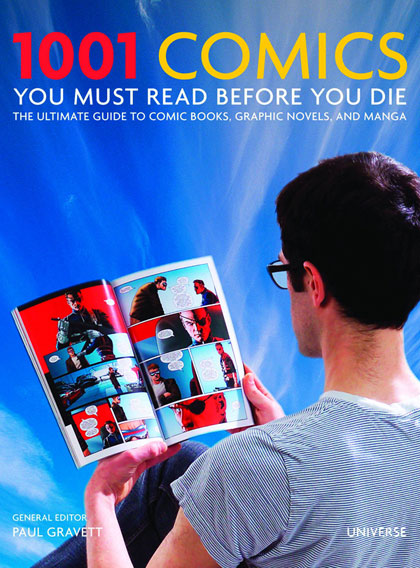
BOOK REVIEW: 1001 COMICS YOU MUST READ BEFORE YOU DIE (2011)

5 star Amazon review.
Absolutely essential.

UK Cover

This book arrived in the same package from Amazon with another of similar size that had been ordered separately. There's a reason I mention this this but it will have to wait to the end of the review.

But first let's dispose of that stupid title. Unlike companion volumes in this series -movies, albums, songs- it is completely impossible for anyone to read all the comics listed unless: you have a lot of free time; a large amount of disposable funds; and are versed in numerous foreign languages. Many of the works are out of print and unobtainable except from national libraries; many have never been translated out of their original language. So forget the title, that isn't what this book is really about.

Essentially it's an historical survey of what the various writers and editor believe to be the best or most significant (the two are not necessarily synonymous) comics ever published. I'd argue that it's also polemical in that it's an argument for comics (by which the compiler includes newspaper strips, comics, graphic novels, manga or whatever form a narrative consisting of words and images appears in) as an art form. Comics are a medium just like films and novels.

It's also a reference book which is arranged chronologically. However, before the entries begin, there is an alphabetical list of titles and at the end an alphabetical index of author and illustrator which lists their included works. (You might not be too surprised to learn that Alan Moore has the most entries.) Include useful introduction and a brief guide to contributors and as a reference work it works very well. What you want to know is easily accessed.

It's enormously wide ranging which means people who read only superhero titles will find it quite disappointing, though the superhero genre is represented along with all the other genres from humour to social realism and all stops in between. It's international in scope which is sometimes frustrating as when a work looks extremely interesting but hasn't been translated into English. And it's also enlightening particularly when you come across something you've raved over but didn't believe anyone else had ever heard of. In my case it was The Chimpanzee Complex (UK, Cinebooks, 3 slim volumes), an amazing work of Science Fiction which I'd read earlier this year. Inevitably you won't agree with all the inclusions and will wonder why some of your particular favourites have been left out but that is all part of the fun of books like this.

The amount of text per entry is just enough to cover the basics of what you need to know about each work and it's up to you and me to decide if we want to dig deeper. There is often a cover or full page illustration to convey the flavour of a work but often there isn't. But then space is limited and the book is heavy enough and price is just enough too.

I do have one criticism to make though, admittedly, it is quite minor. A few more works could have been included by excluding multiple entries of a single title by the same creator (Asterix, Corto Maltese, Blake & Mortimer). This doesn't apply to series which have different creators (Batman).

Of course with books like this, because of the publishing lead-in time, they tend to be out date as soon as they appear. The book which arrived in the same package is Craig Thompson's new masterpiece Habibi, a truly remarkable graphic novel like nothing you've ever read and one that certainly ought to have been included but for its almost simultaneous publication date. And then I looked at the last entry...
 US cover